When high watchmaking competes with a weather station
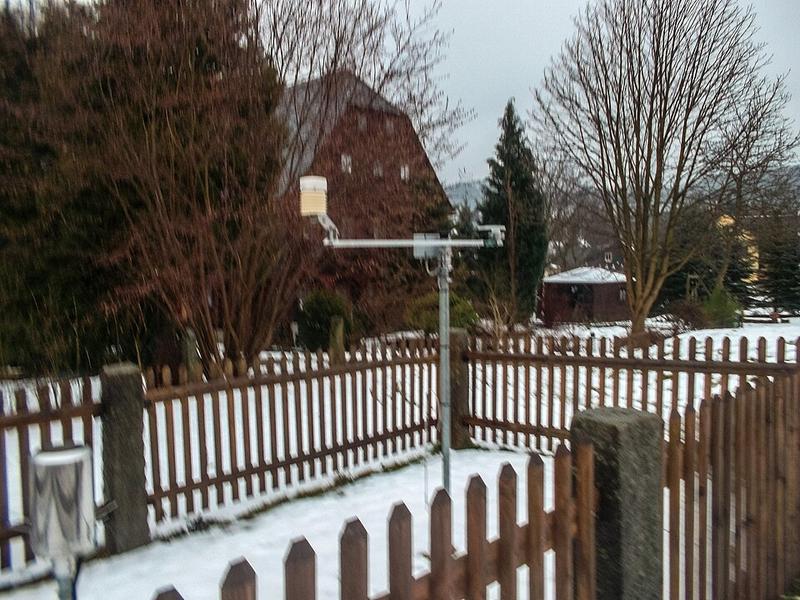
Weifa is a small town in Saxony, Germany. And with small I mean that you can scroll through the town’s history on Wikipedia in two minutes. One of its three “places of interest” is a weather station along the main road.
If you want quiet and to be left alone, this is where you’d go.
Source
Fiver, der Hellseher (wikipedia.org)
The infamous weather station in Weifa.
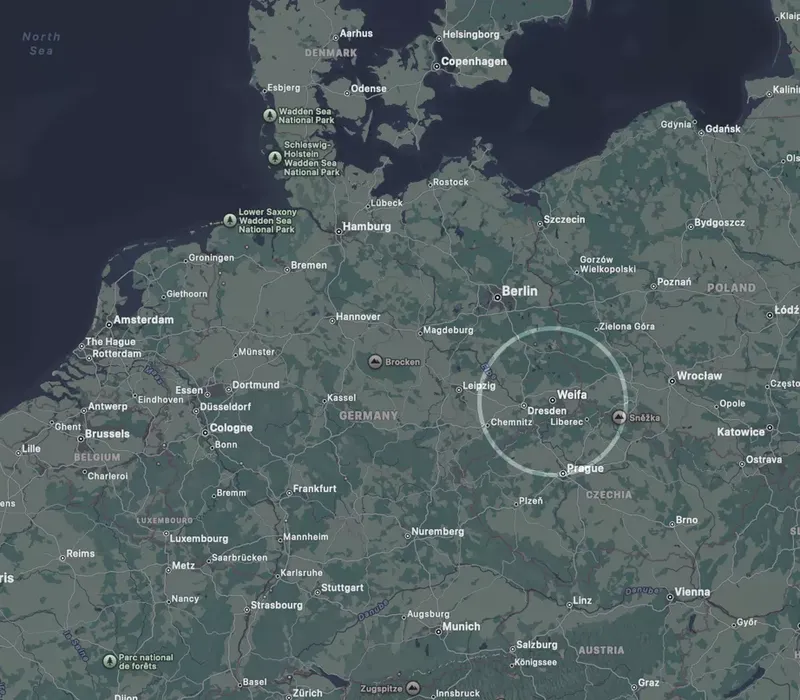
Weifa is just between Dresden and Görlitz in Eastern Germany.
And yet, among the 700 souls of Weifa, there is a small company making beautiful watches. Watches that not only look great, but are internationally recognized for their quality and design. Kudoke was the first German watchmaker to win the Petite Aiguille award at the Grand Prix d’Horlogerie de Genève (GPHG) in 2019. And again in 2024.
So don’t judge this small town too quickly; there is far more here than meets the eye.
Kudoke who?
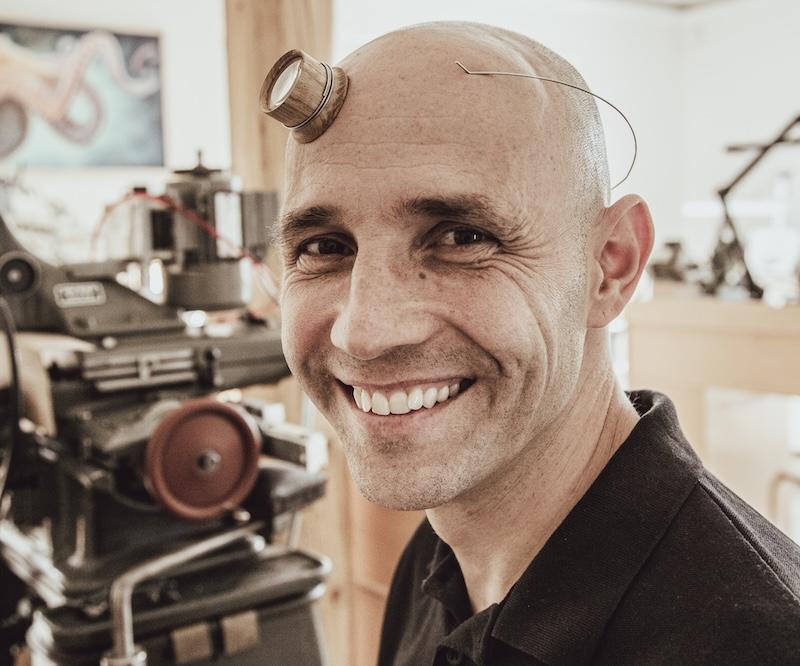
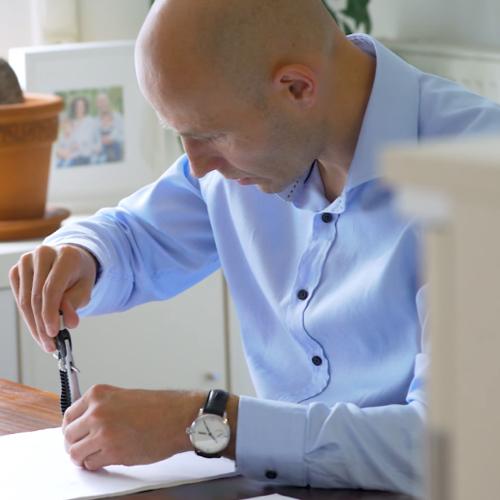
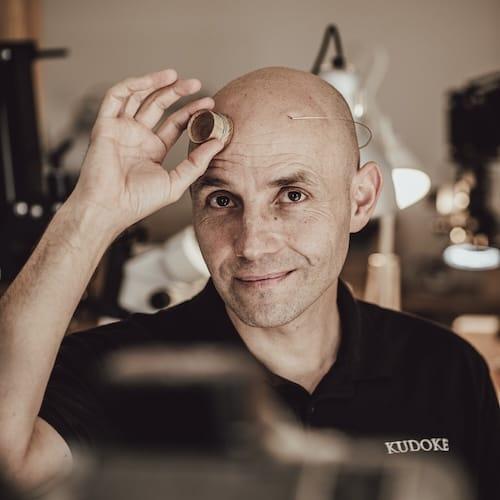
Kudoke! The name, sounding like a martial artist’s shout before splitting bricks, belongs to someone specialized in more delicate work, which is fine watchmaking. Stefan Kudoke worked for Glashütte Original, Breguet, Blancpain and Omega, and earned his Master Craftsman Certificate at the soft age of 22. But while he sat at the benches of the world’s finest manufactures, the idea of doing his own thing quietly began to grow.
Source
kudoke.eu
Producing a beautiful, functioning watch is one thing. Creating a sustainable watch brand is another level. That’s why Stefan went on to study Finance and Economics at the Brandenburg University of Technology. One year after graduating, in 2008, he and his wife Ev founded Kudoke. That’s where the story truly begins.
Source
kudoke.eu
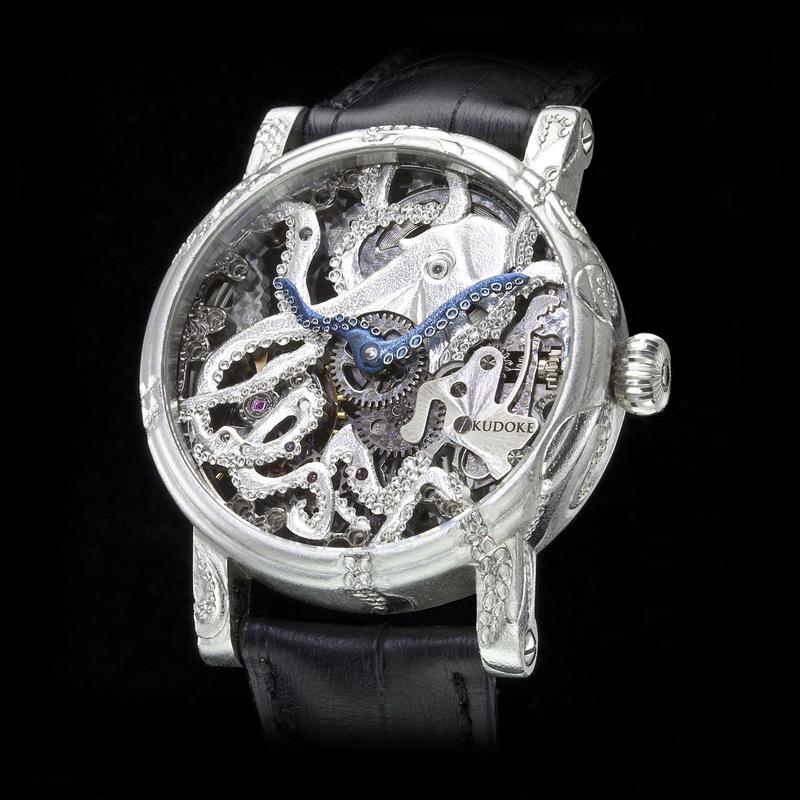
One of Kudoke’s early watches, the “Free KudOktopus”
The first Kudoke watches, which defined his early style, were hand-skeletonized, hand-engraved art watches, now grouped under the Kunstwerk collection. I’m not the biggest fan of this era stylistically, but I find the history fascinating and the evolution impressive. These watches found buyers that wear them on their wrists as artefacts of what is possible through hand engraving and skeletonization.
From artistry to classic watches: the Handwerk collection
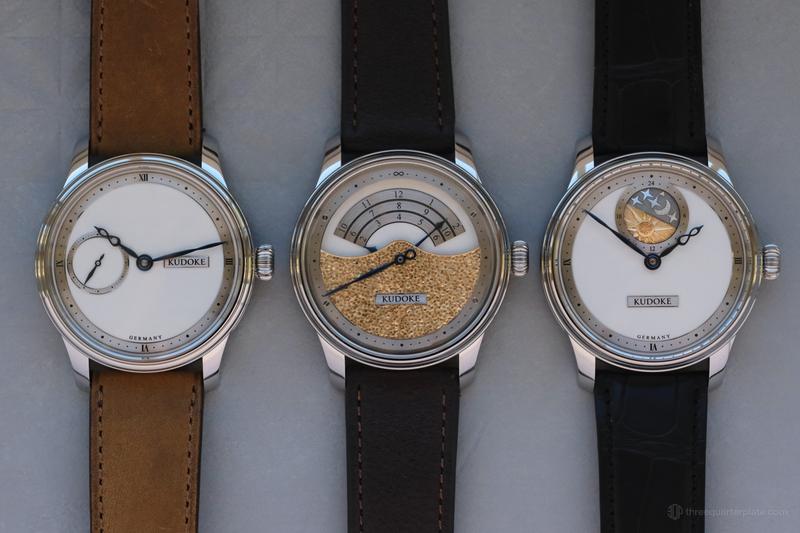
Now that we know where Kudoke began with the Kunstwerk collection, let’s look at the Kudoke 3, part of the Handwerk line. This collection represents the natural evolution of a watchmaker who also wants to see his creations on more wrists—offering traditional craftsmanship at a more approachable price point and with more universal designs. The octopus is iconic for Kudoke, but not for everyone.
The Handwerk collection debuted alongside Kudoke’s first proprietary movement, the Kaliber 1.
From left to right: the Kudoke 1, Kudoke 3 and Kudoke 2.
A complication that’s not complicated at all
The chronograph minutes indicator on the Glashütte Original Panograph.
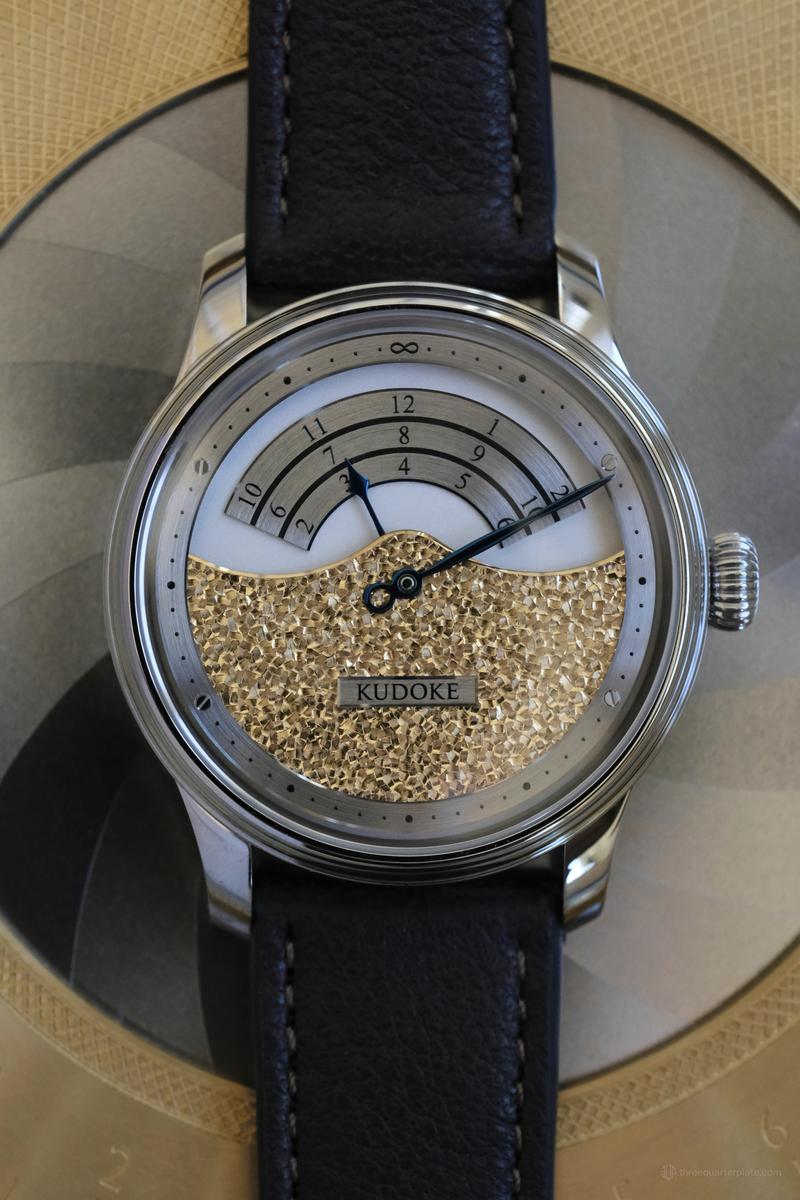
When I first saw the unusual time display on the Kudoke 3, I wondered how it worked. Was it similar to the Glashütte Original Panograph with its three chronograph hands of different lengths? That mechanism is wonderfully complex. The reality here is much simpler.
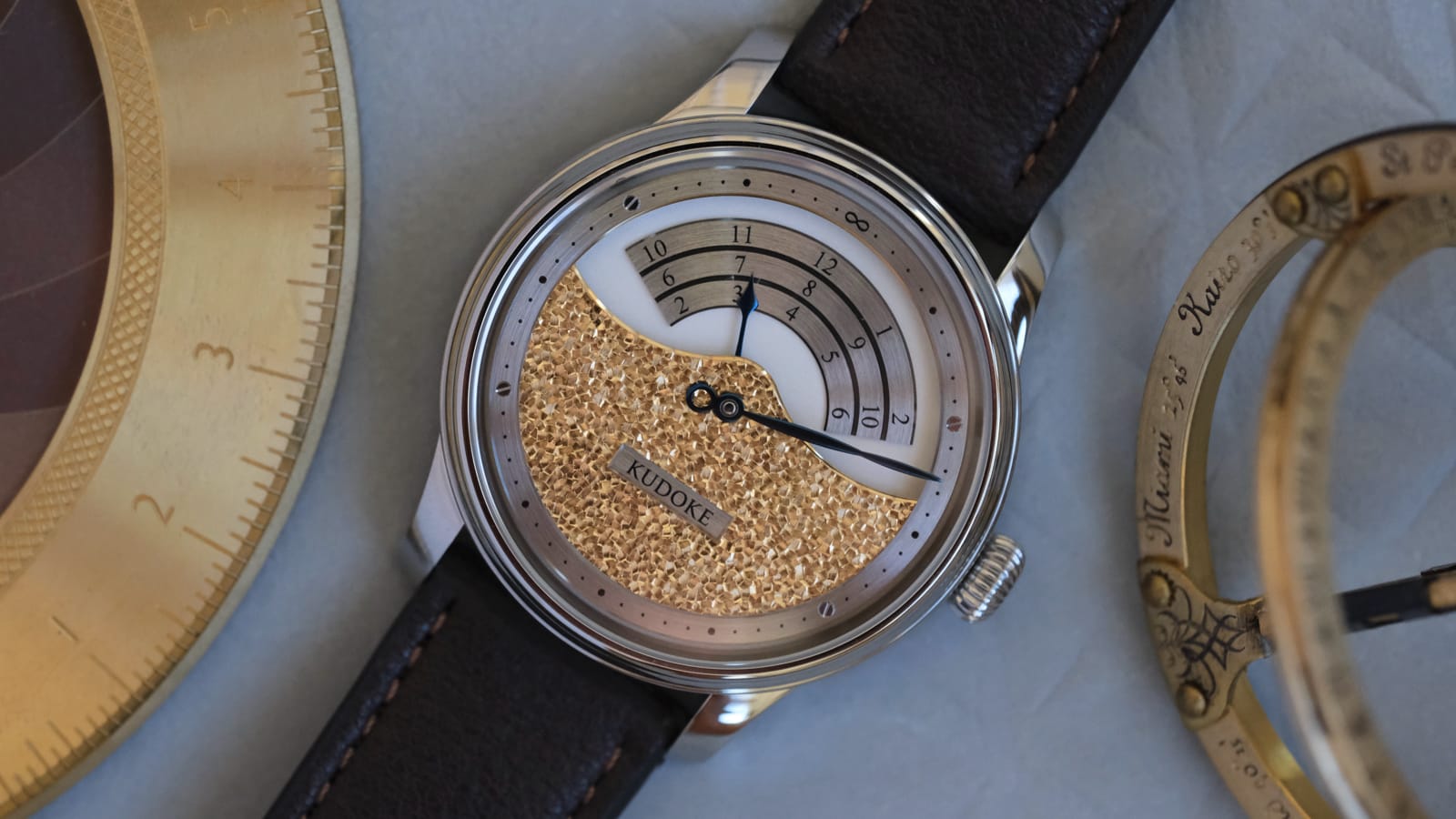
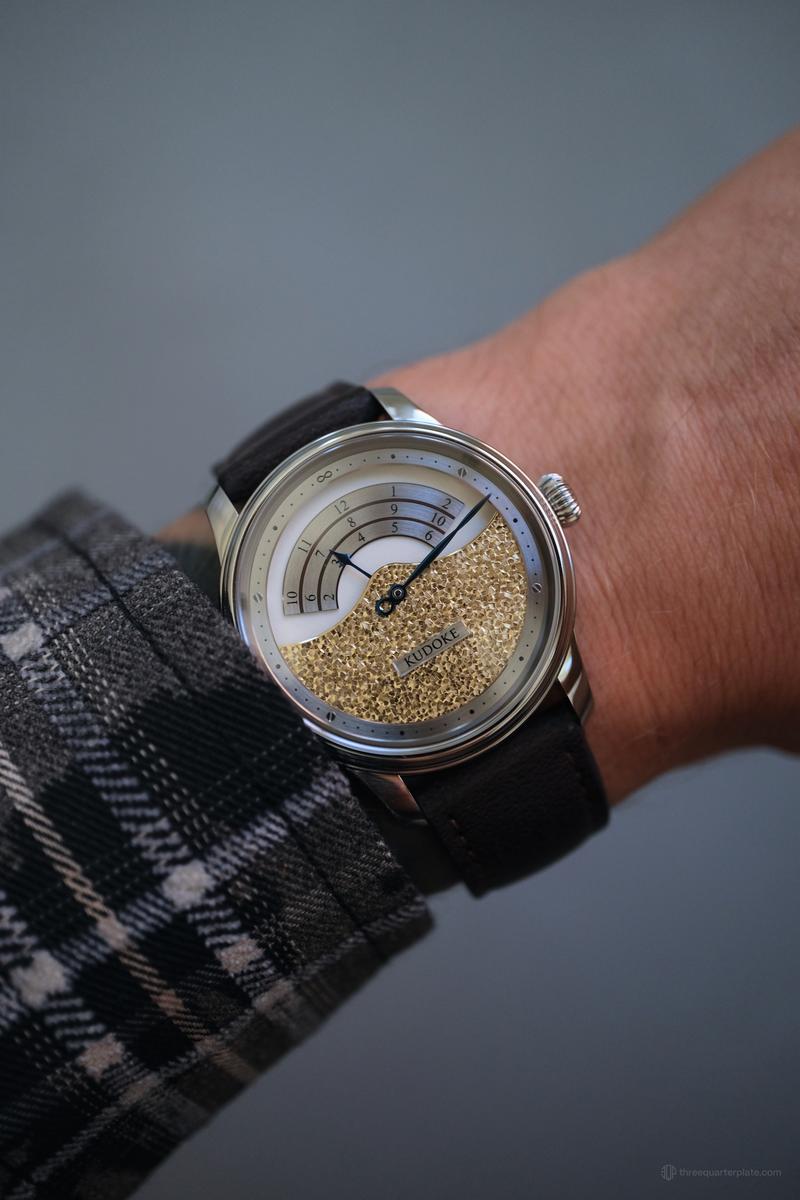
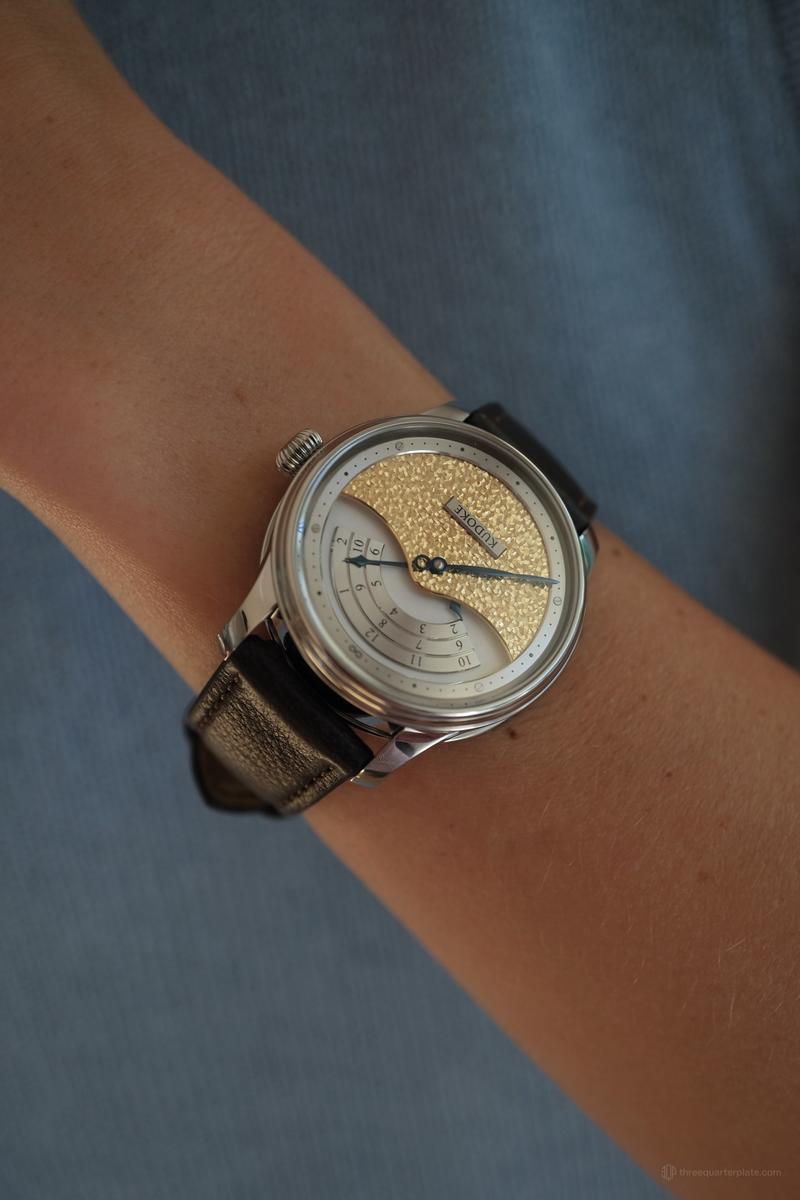
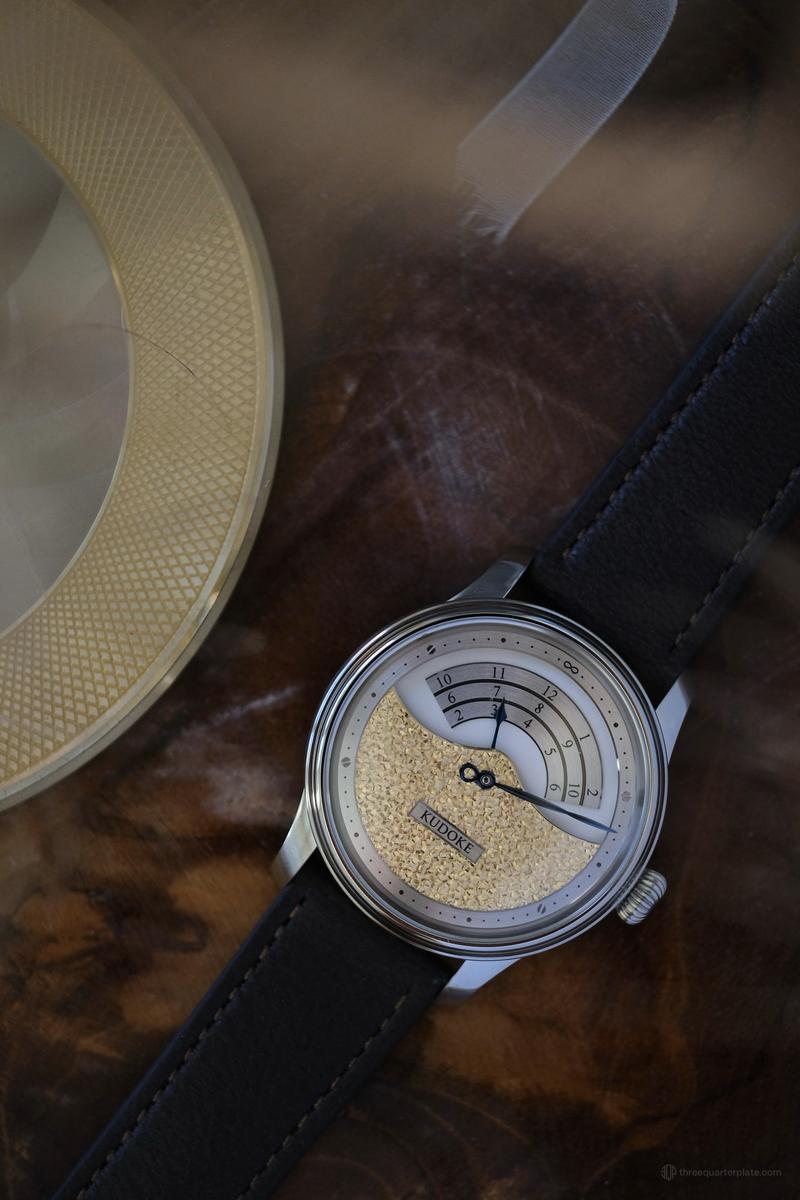
The hour hand is just one hand with three arms of different lengths. Perhaps a subtle nod to the earlier octopus-themed watches. These arms aren’t stacked. They’re centrally mounted, and pointed in different directions. Visually it resembles a throwing star or a rotating saw blade. Depending on the time you sometimes have the same hour being indicated by two hands at once for a short duration until one hand disappears.
This happens at 2, 6 and 10 o’clock, where you’ll see two hands at once. I made an animation so you can picture it clearly. Simple, but effective. After wearing the watch for a while, I adapted quickly. The watch always looks a little different every time you glance at it. At the same time, you have the central minute hand that is making its rounds, visible all the time.
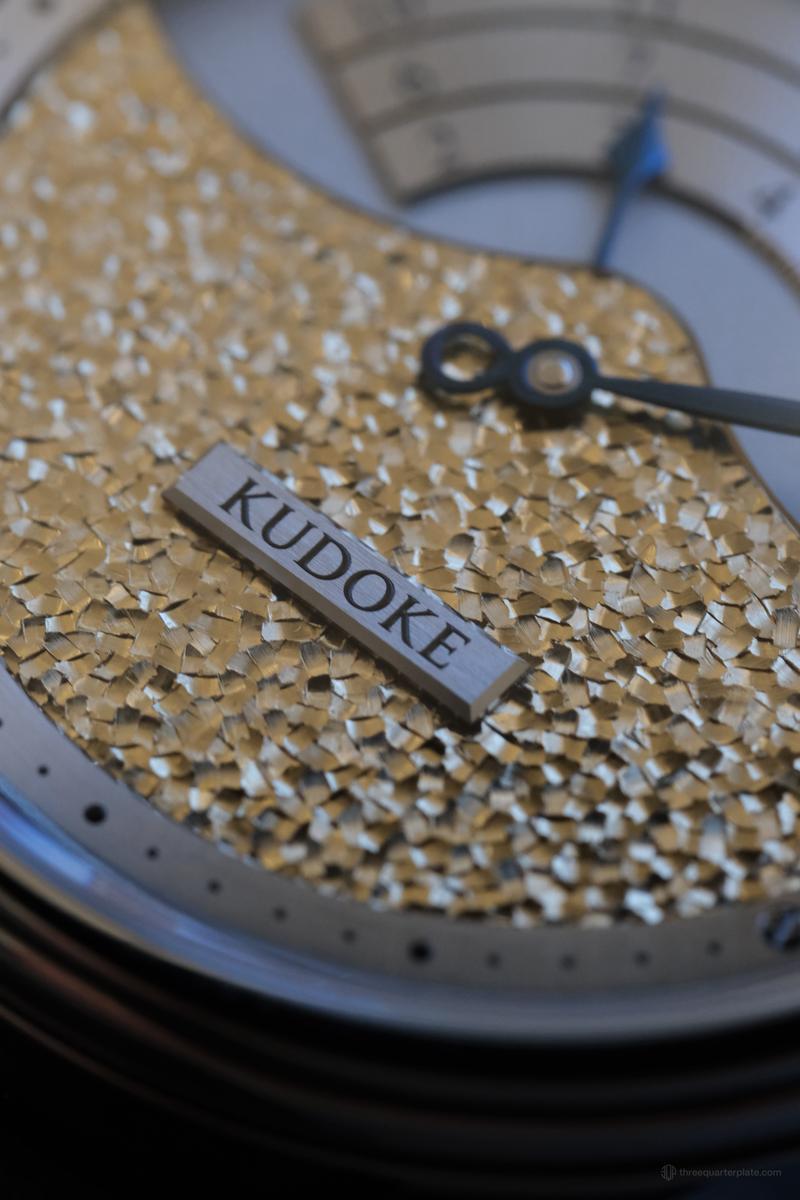
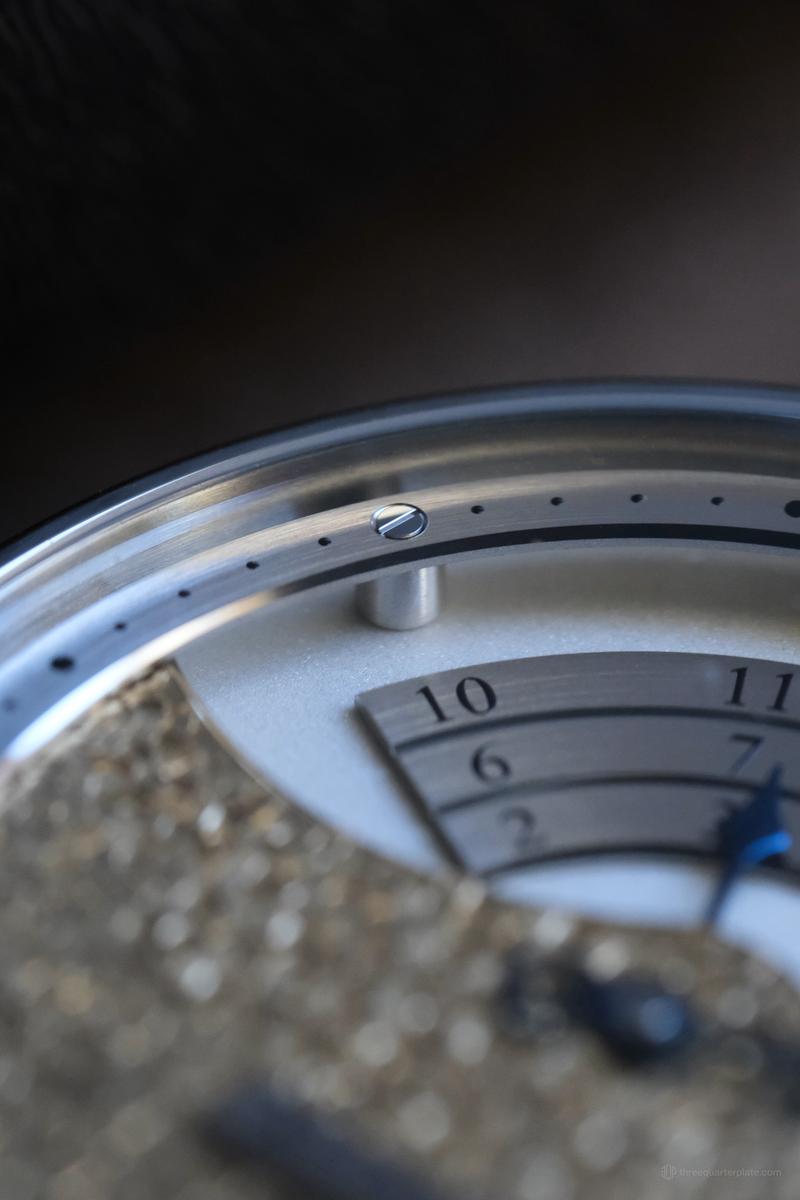
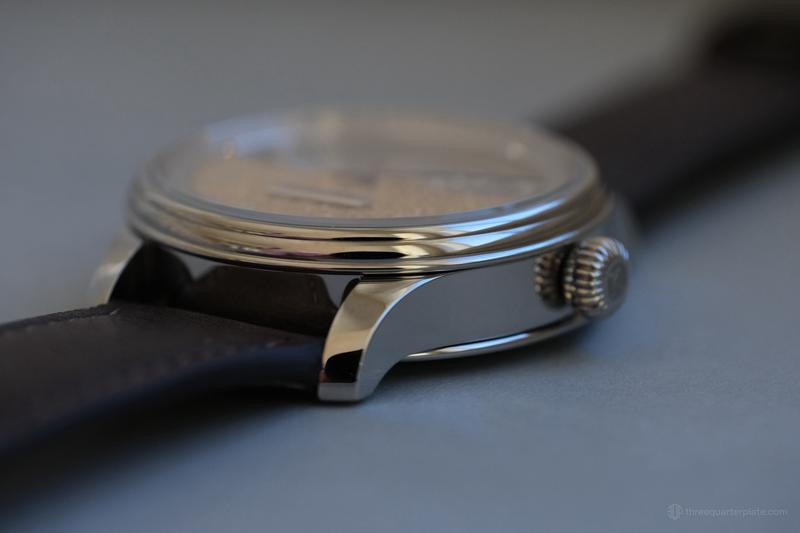
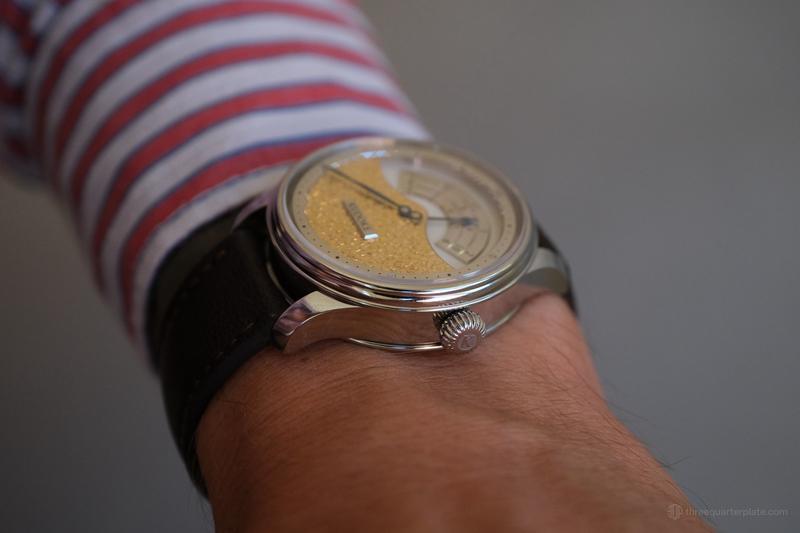
The dial is full of small details. Remember how we talked about levels earlier? Look from the side and you’ll see an outer ring sitting slightly above the dial. The golden plate on top is yellow-gold plated. Every tiny scratch forming the textured surface is engraved by hand, producing the little flakes, hence the name model name “Flakes Gold”. I can hardly imagine the craftsmanship required to create such balanced chaos.
Wrist circumference: 17.5 cm (6.89″)
A custom movement inspired by English pocket watches
Inside the Kudoke watches of the Handwerk collection you’ll find the Kaliber 1, based on Austrian watchmaker Habring’s A11 movement. This caliber was developed after ETA’s Valjoux 7750 and 7760 became difficult for independent brands to source, once ETA limited supply to companies outside the Swatch Group around 2011. So Habring rallied together their partners in Germany, Austria and Switzerland to build their own movement. This meant producing the escapement, balance wheel and hairspring in addition to the entire wheelwork, winding mechanism and hand adjustment mechanism.
Source
habring2.com
The A11 movement of Austrian watchmaker Habring², which Kudoke’s Kaliber 1 is based on.
An enormous undertaking, especially for a company like Habring, which produces roughly 200 watches a year. That’s about as many as Rolex makes during an extended lunch break. The new caliber suddenly cost three to eight times more than the previous Valjoux-based movement. You can read more about the A11’s backstory on Habring’s website.
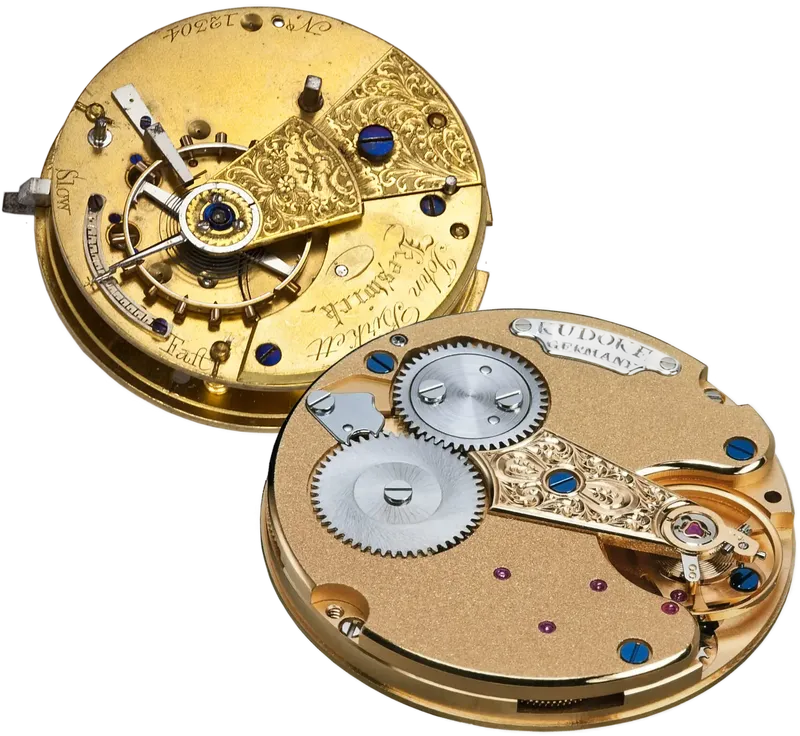
Kudoke then used the A11 as a starting point to mark a new chapter by creating their own movement, the Kaliber 1. Its unusual appearance is inspired by an old English pocket watch.
An old English pocket watch movement that inspired the design of the Kudoke Kaliber 1.
Stefan explains: “During the development of Kaliber 1 I got inspired by the design of historical English pocket watches whose use of forms I deliberately incorporated into my movement. Ages ago I bought an old English pocket watch movement that lay unused in a drawer for a long time. One day it fell into my hands again – just as the idea of an own movement began to take shape.”
The story wrote itself: the Kaliber 1 would honor the old masters of watchmaking and the historical collaboration between English and German horology. German diplomat and astronomer Hans Moritz von Brühl supported English precision watchmaking, notably by patronizing Thomas Mudge, who was the inventor of the lever escapement in the 18th century. This exchange later helped bring English expertise to Saxony and laid the foundations for the Glashütte watchmaking region.
What makes the Kaliber 1 special?
“The core values that are important to us are extreme handwork. This means we really do the polishing and finishing by hand. We include the old craft skills of classic watchmaking in our watches and do all of this for a product price that is justified for the large amount of handwork in the watch. It’s a fair product with excellent handwork inside.”
Stefan Kudoke, translated from German in this video.
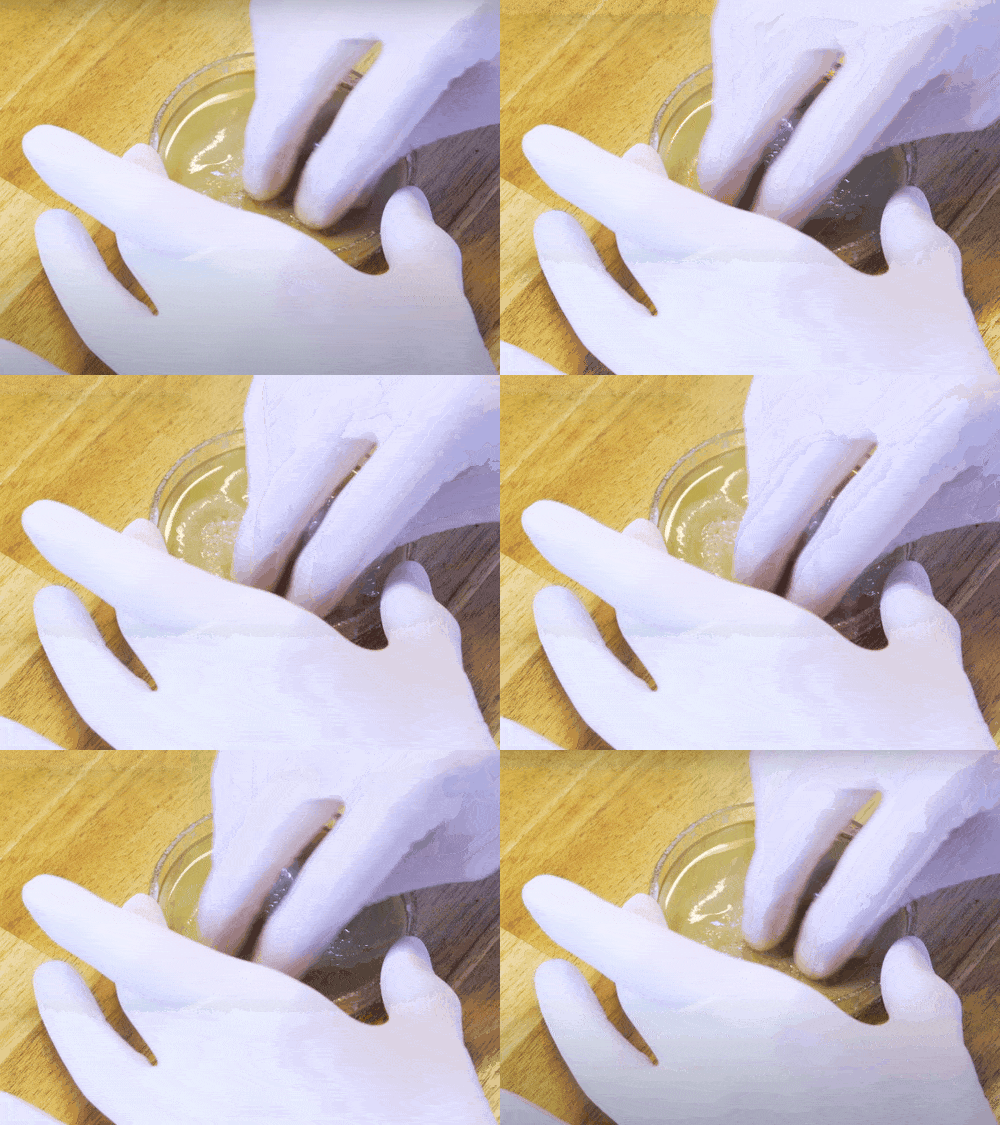
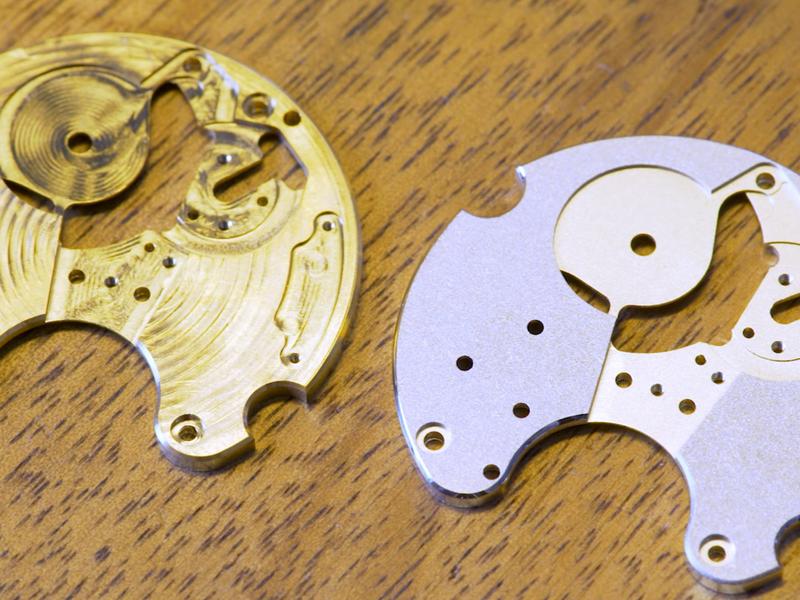
To achieve the frosted finish on the wheel bridge, a special reaming technique is used. The bridge is finely textured in a flat glass dish with oil and synthetic stones. Depending on the applied pressure, the process takes between one and four hours to achieve the perfect shimmering structure.
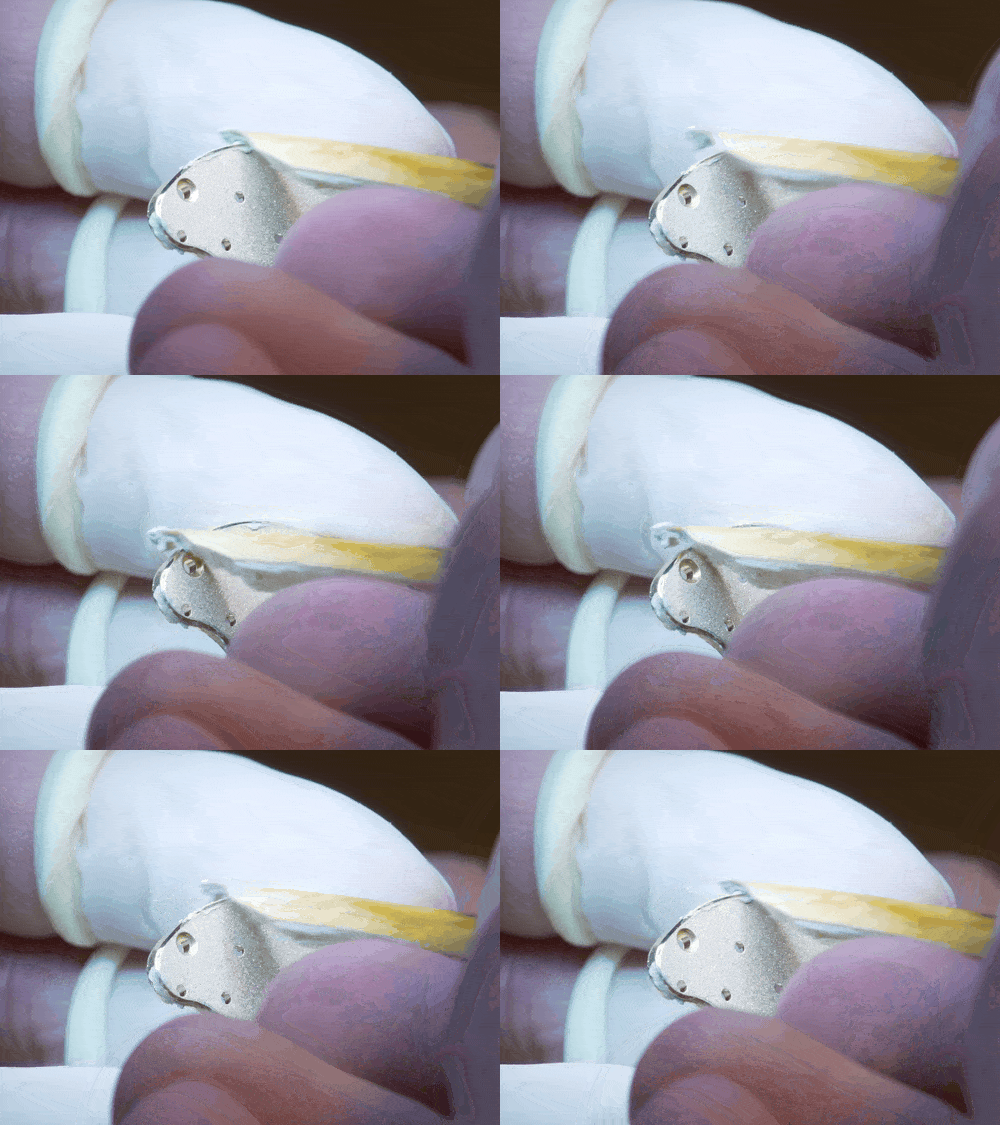
The edges of the bridges and steel components are polished by hand using a fine polishing paste and a soft wooden stick.
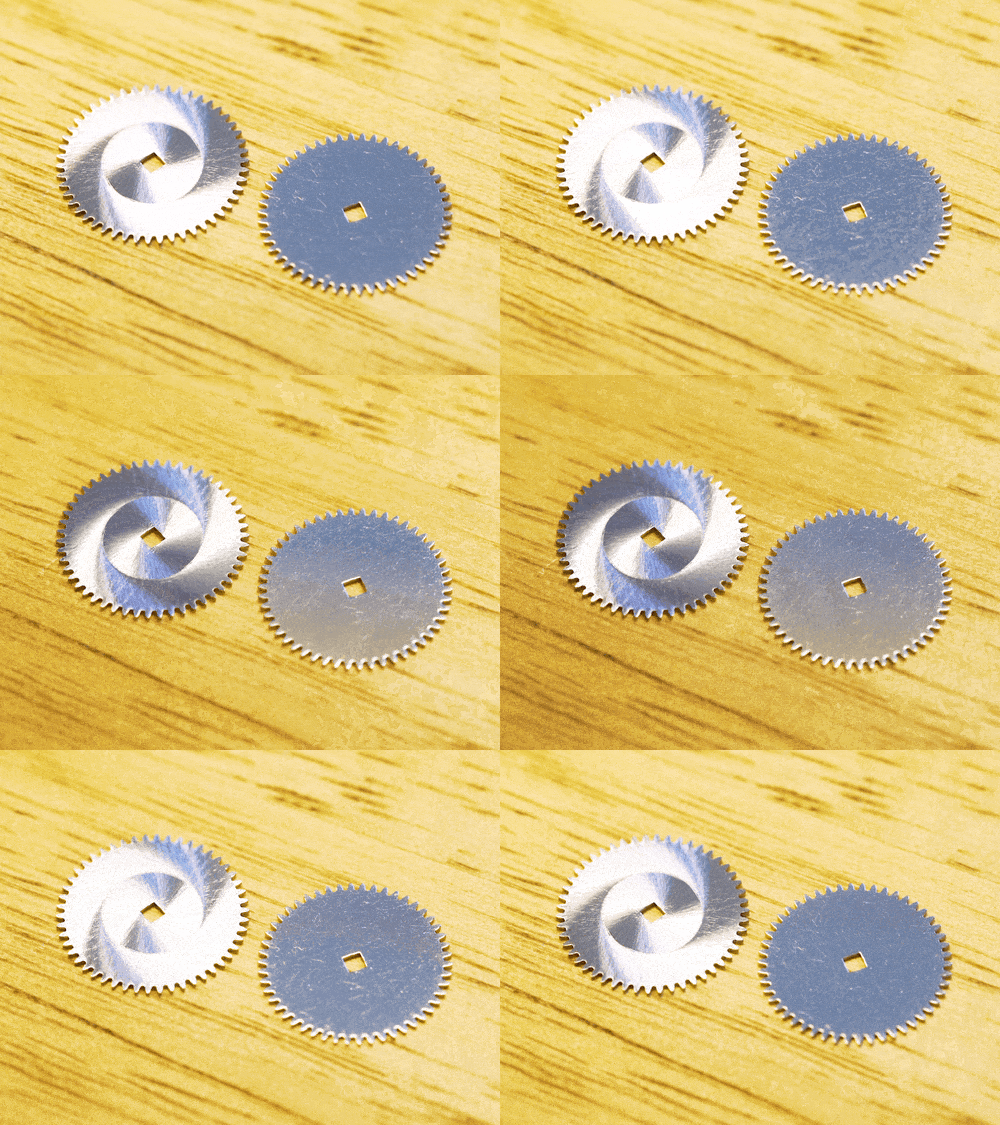
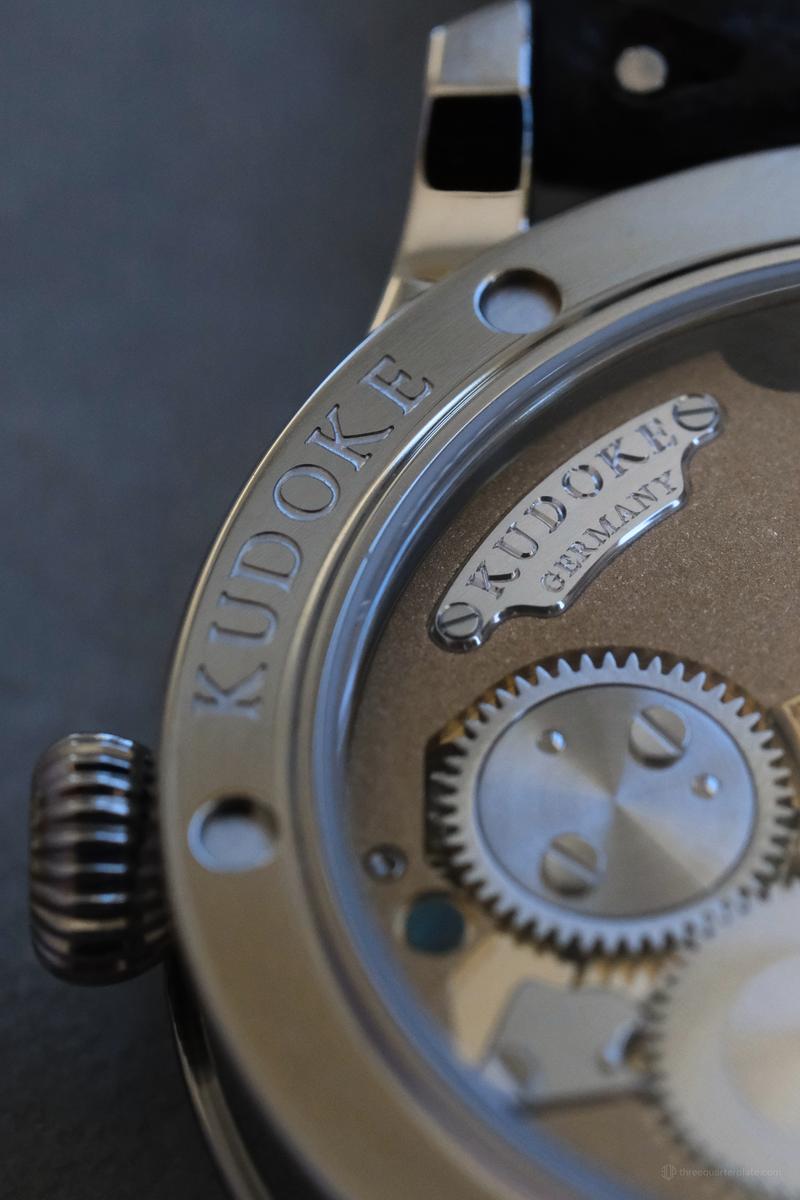
Wheels like the ratchet wheel receive the traditional Glashütte sunburst finish, applied freehand on a machine. The pattern radiates outward from the center, creating an effect where reflected light appears to glide in a circle as you tilt the watch.
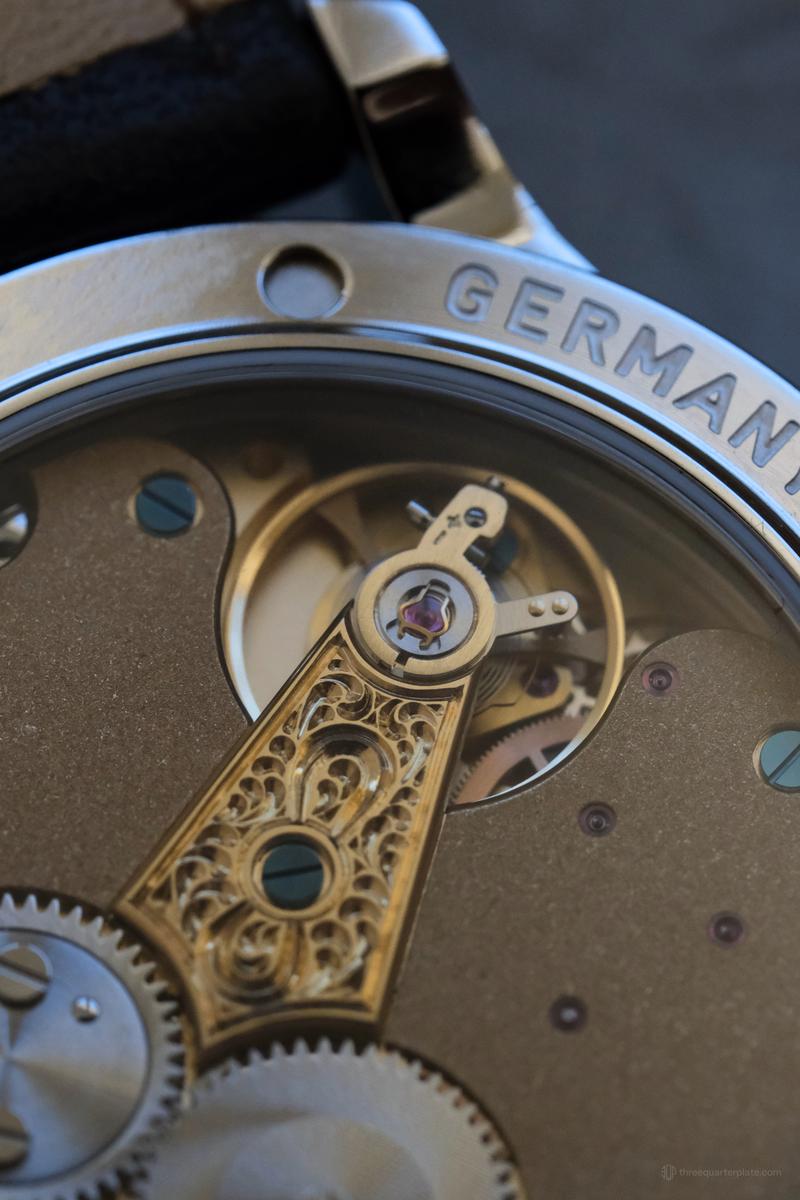
The balance cock is then hand-engraved, and this is where you’ll find the infinity symbol ∞, which also appears on the dial at 12 o’clock. There’s plenty to discover, and you’ll notice subtle variations from one watch to another.
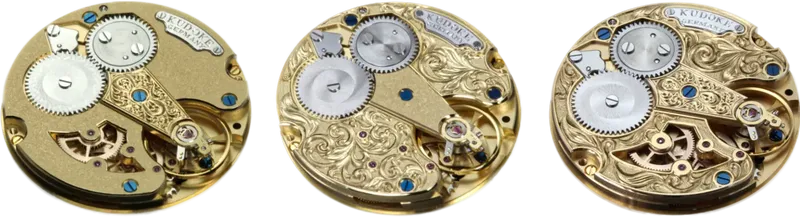
For those who want it, Kudoke offers even higher levels of finishing, such as partial skeletonization or extended engraving on the wheel bridge. I bet if you’d want to slip in some initials or a little personal symbol, that would be possible. Just ask!
From left to right: part-skeleton, fully relief engraved, combination of the previous two options.
Before we move on, a quick Thank You.
How it wears
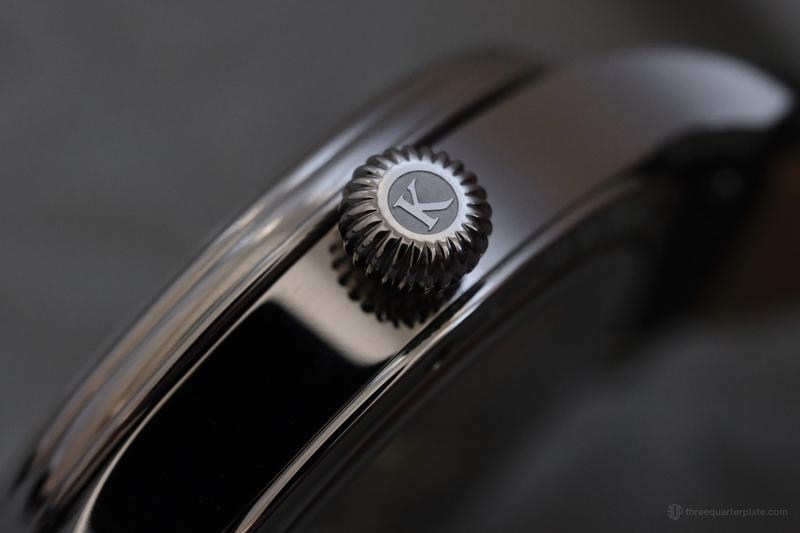
The case is made of polished stainless steel and offers 5 bar of water resistance, which is enough for daily wear. The large onion-shaped crown marked with a K provides great grip, and winding the Kaliber 1 comes with a satisfying clicking sound.
The interplay of various craftsmanship techniques from the dial carries over to the case, where even the bezel consists of three layers. At 39 mm in diameter and just 10.3 mm thick the watch wears great. That is the case on my 17.5 cm wrist as well as in the 14.5 cm wrist circumference of my partner which you’ll see throughout this article.
Wrist circumference: 17.5 cm (6.89″)
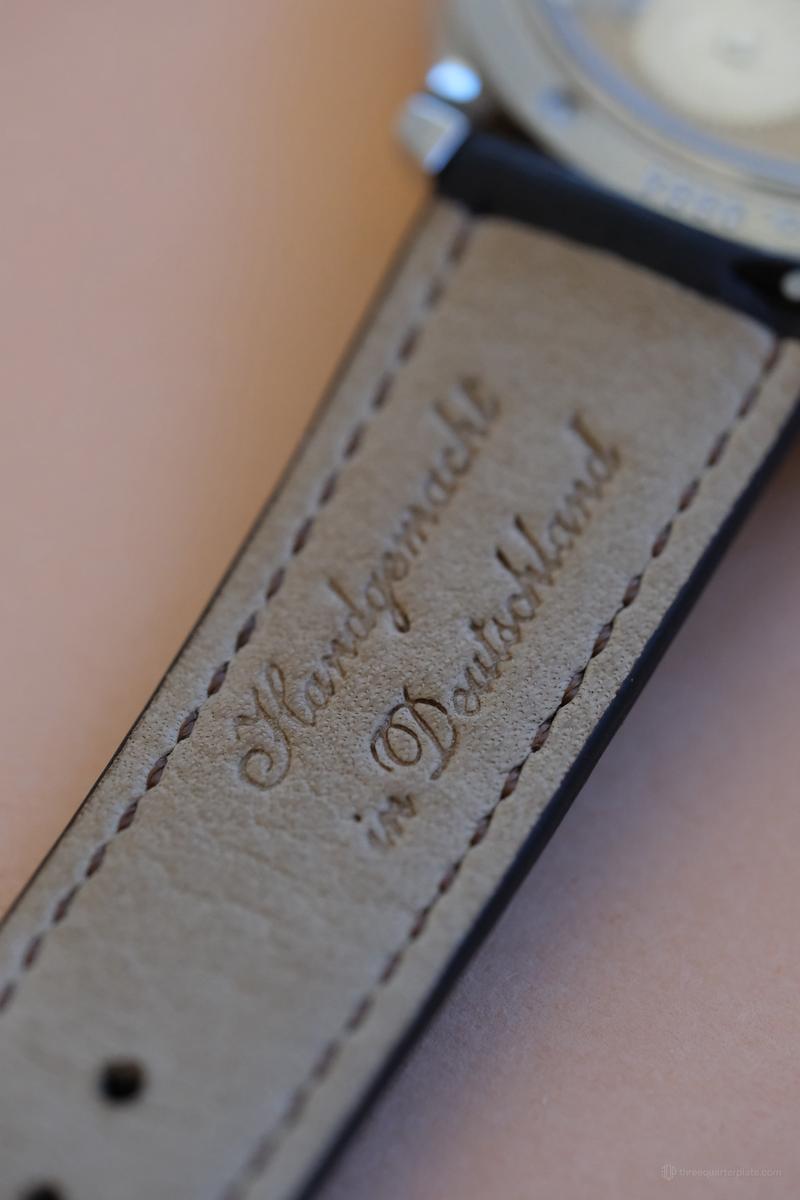
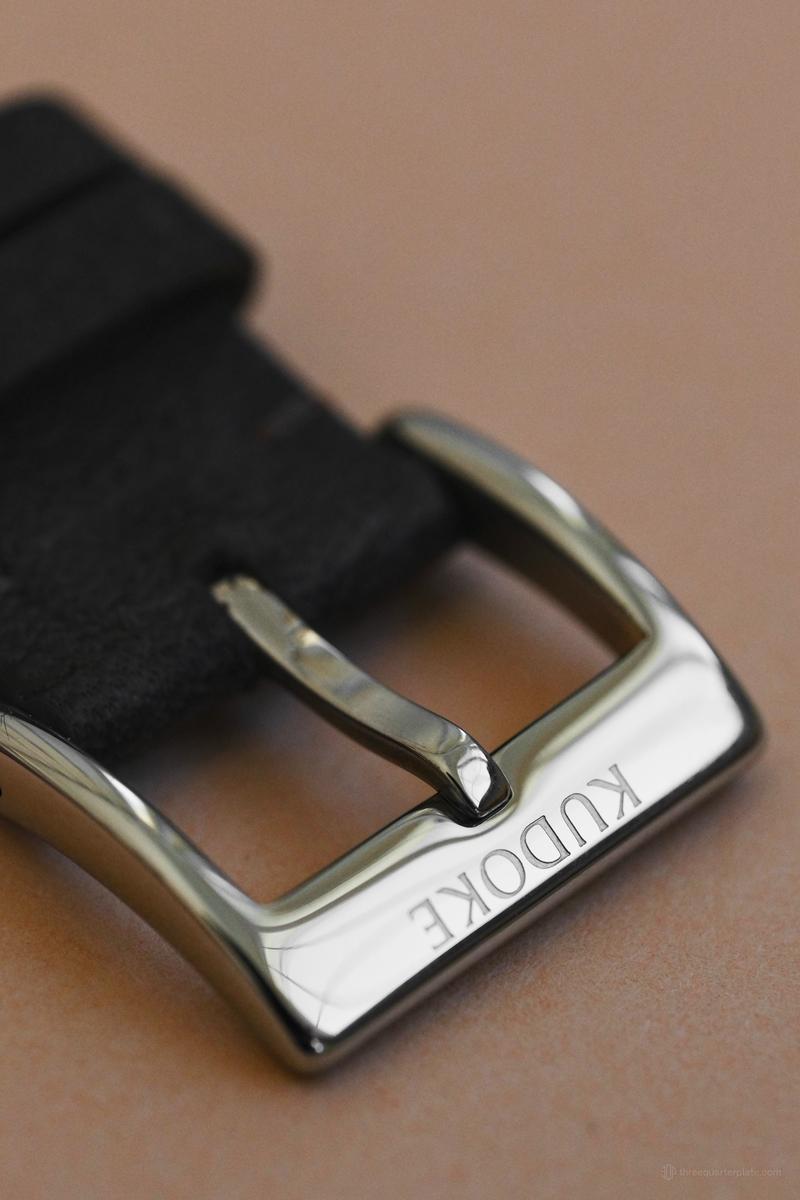
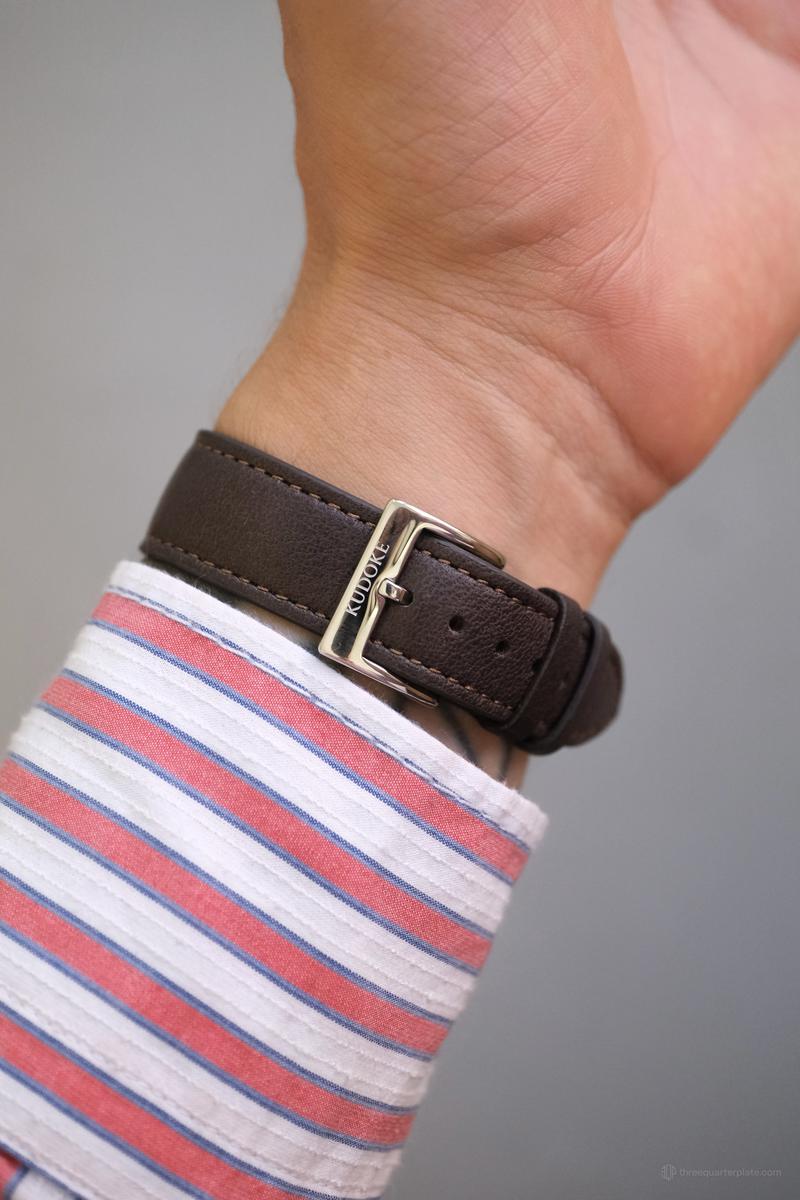
Like all Kudoke watches, this Kudoke 3 comes on a leather strap, hand made in Germany.
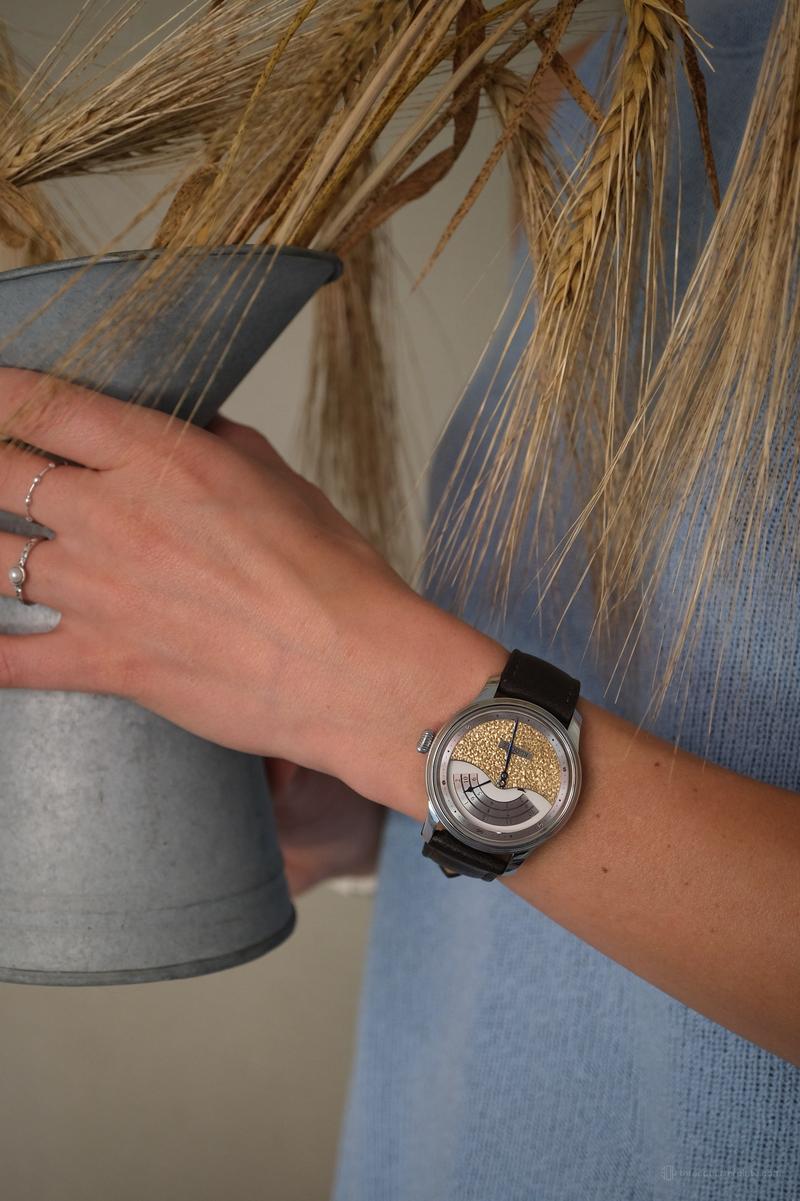
With a lug width of 20 mm, the watch pairs easily with many straps. The combination of yellow gold and steel would also look fantastic on petrol blue, olive green nubuck, or even a canvas strap for contrast.
Wrist circumference: 14.5 cm (5.71″)
The Kudoke 3 also wears great on smaller wrist sizes.
In an interview, Stefan Kudoke was asked what advice he would give aspiring young watchmakers.
“Stay independent! For us it is not important to grow fast, but to stay independent – financially as well as in our mind. We have seen too many good watchmakers failing after investors have taken over the product development strategy.
As an independent watchmaker you are often the heart and soul of the brand and that is what watch enthusiasts appreciate. We prefer to grow at our own pace – this may be not too fast, but it ensures, that the quality of our watches stays consistently high still representing the values we are committed to.”
Stefan Kudoke, in an interview with Watch Affinity.
Source
kudoke.eu
It’s understandable that bringing in outside investors can help a company grow, but it also adds new voices and expectations. While an independent watchmaker may be happy simply making great watches and paying salaries, an investor will inherently expect returns. Some watchmakers take on shareholders to “secure their legacy”, so that current and future clients are assured that their watches will still be serviced in 20 years. François-Paul Journe, for example, brought Chanel in as a minority shareholder in 2018.
These reasons make sense, but the little rebel in me still loves the image of the rogue watchmaker crafting fantastical timepieces in the Saxon wilderness. That’s what you get with Kudoke: excellent craftmanship and interesting complications in a unique design that immediately identifies it as a Kudoke.
“All that glitters is not gold”. The Shakespearean aphorism reminds us that not everything that appears precious truly is. The Kudoke 3 “Flakes Gold” features a glittering golden disc on the dial, yet it isn’t solid gold. Is it trying to deceive us? I would argue the opposite. The Kudoke 3 reveals its true qualities only upon closer inspection and surprises with hidden details and a human touch.
The same saying is reversed in a poem by J. R. R. Tolkien. Yes, the man who wrote one of the greatest book series ever.
All that is gold does not glitter,
Not all those who wander are lost;
The old that is strong does not wither,
Deep roots are not reached by the frost.
J. R. R. Tolkien’s poem “The Riddle of Strider”, in “The Lord of the Rings: The Fellowship of the Ring”
Something can hold value even if it doesn’t glitter. A lyrical homage to subtlety and understatement. I refuse to drop the overused term “quiet luxury” and put Kudoke next to beige lamb wool sweaters and preppy loafers. It hurts to say the term does fit quite well though. True worth is often subtle. I also wouldn’t blame you, if you silently whisper “My precious…” to your Kudoke, while you admire the three-armed hour hand on the dial and caress the flanks of the case. Only perfectly normal watch collector stuff. Just please don’t throw your watch into the volcano.



Write a comment