
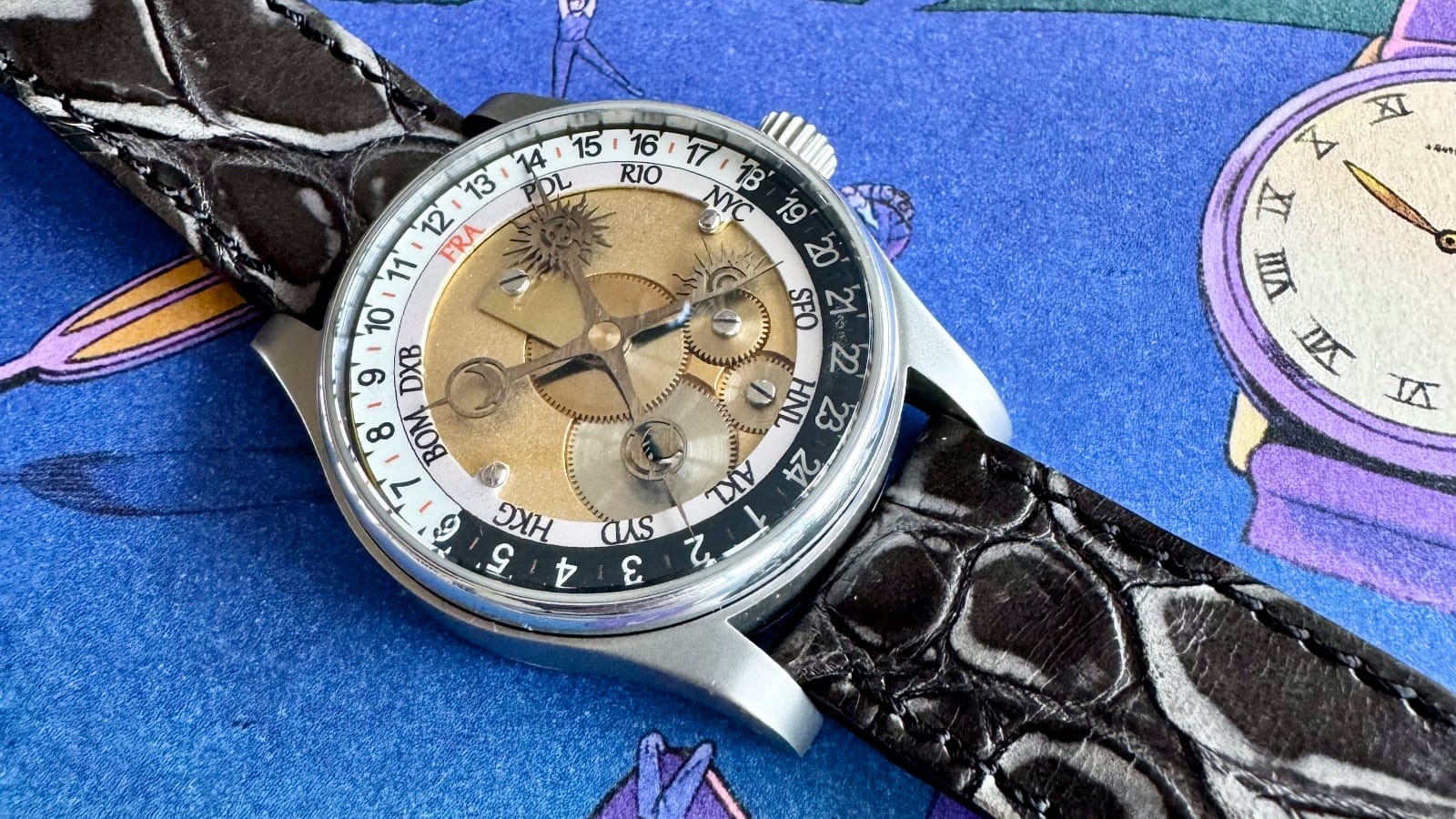
What if you could design your own watch and own a piece crafted by an independent master watchmaker? This unique piece does exactly that. It’s a caller GMT (the function most of us actually use) without the clutter of daylight saving time, half-hour zones, or equations of time. The philosophy? Clarity over complexity. Analog over semi-digital.
I came up with the idea for this watch some time ago. One of my favourite watches is the ochs und junior day/night. The watch features a 24-hour sun indicator. I considered adding an azimuthal polar projection, which is a world map centered on the North Pole, so the sun would point to where it’s true noon. But this felt too detailed and potentially expensive. Adding city names for orientation seemed like a compromise and didn’t quite satisfy me.
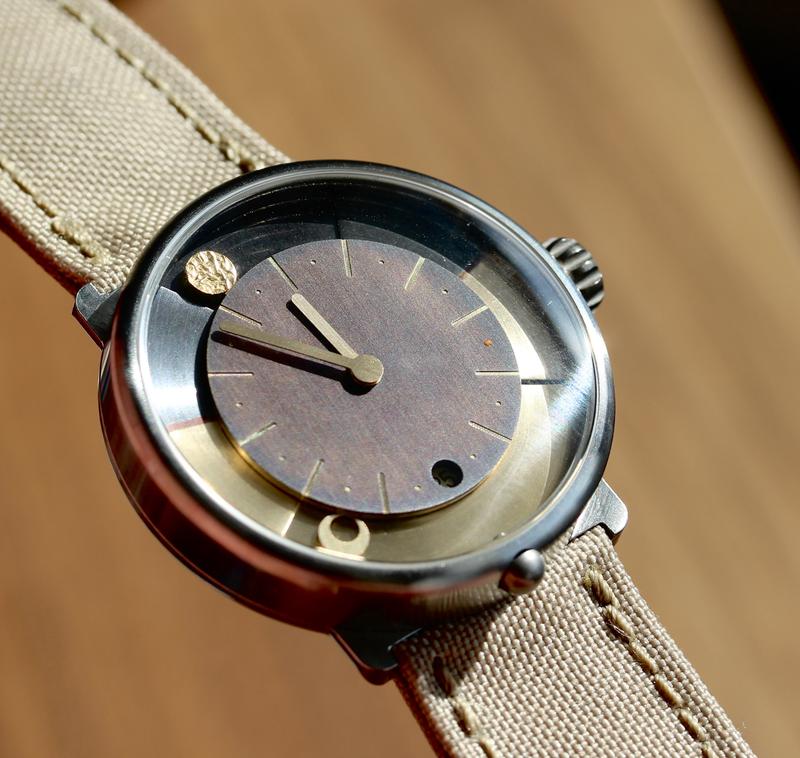
Ultimately, either option would compromise the clean design of the ochs und junior day/night that I so much like. The idea of creating a special watch began to take shape in my mind as I started looking into single-hand watches with 24-hour dials. I came across some great options, such as the Uno 24 by Botta Design. I also found something as exotic and ingenious as the the Prototype ONE. However, they both lack a world time function.
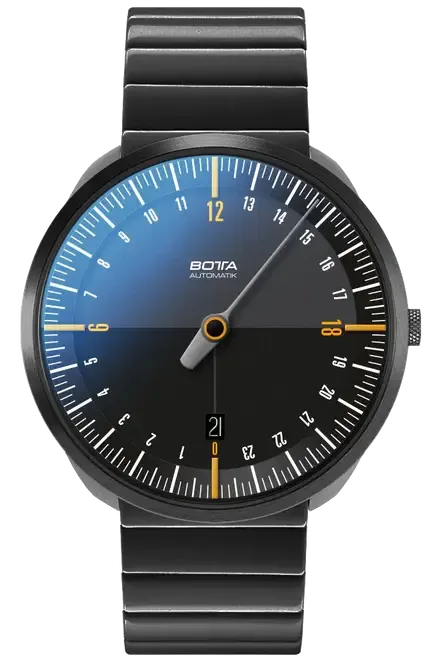
Source
botta-design.de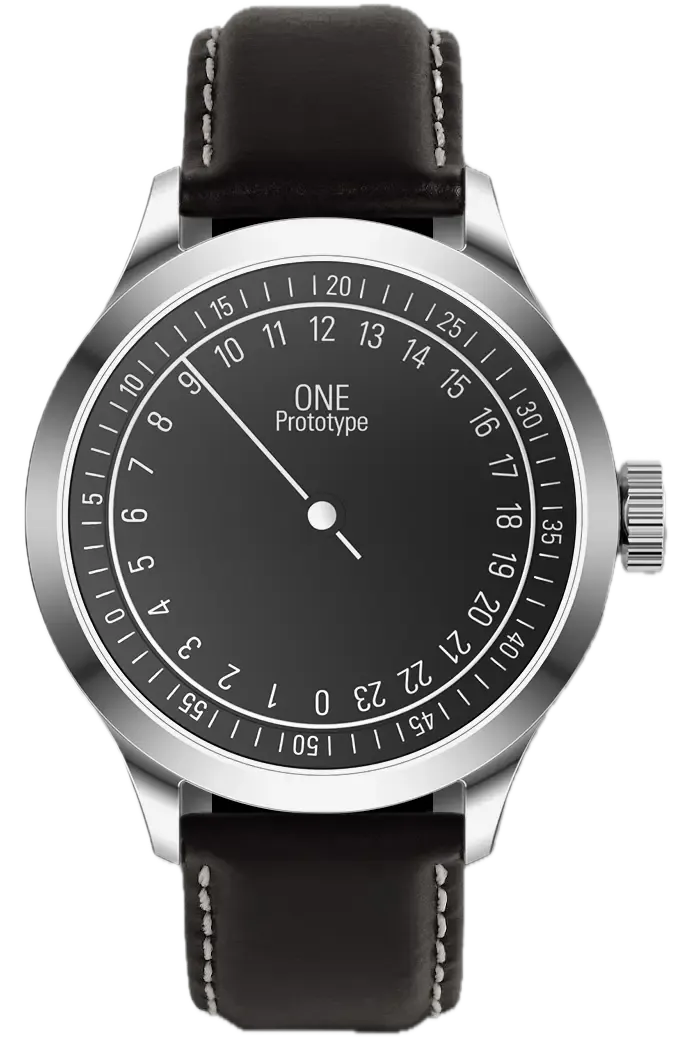
Source
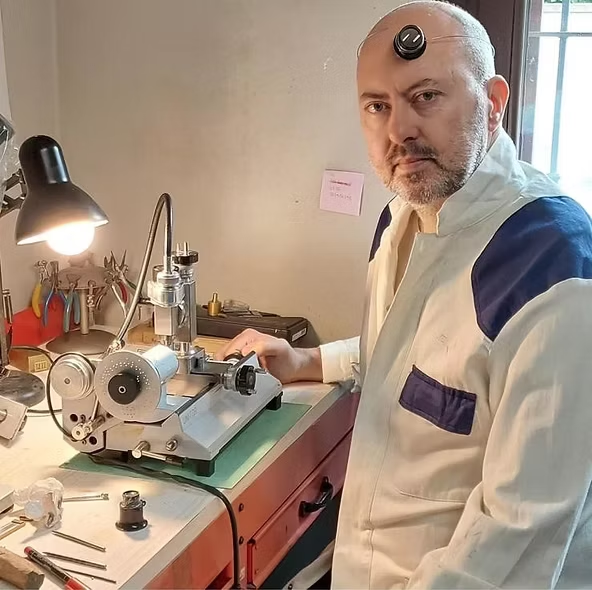
prototypeone.chWhile searching for world timers, I came across the watches from Marc & Darnò in Italy. I immediately thought: “You know him, he makes those crazy astronomical complications that somehow remind me of Ludwig Oechslin.” Marc & Darnò is run by Marco Guarino. Marco is a watchmaker from Asti in Piedmont who specialises in astronomical complications and puts a lot of manual work into his watches. His design language often appears rough and may not be to everyone’s taste, but it suits mine perfectly.
I had already met Marco at Watches and Wonders in Geneva. He is an AHCI candidate who had a booth at the Masters of Horology exhibition. I got in touch with him and we began developing my idea together. To my surprise and delight, he didn’t find my concept too simple and he agreed to work on the project with me. Compared to his other watches the design is actually quite simple.
Who is Marco Guarino?
Marco Guarino, born in Piedmont in 1973, learned his craft at the watchmaking school in Turin, then continued his education as an autodidact, specialising in astronomical complications, including such unique features as the lunar equation and a Hindu calendar. One could say that Marco is a child of the northern Italian watchmaking tradition, as this region is considered one of the most important and earliest “development centres” for tower and astronomical clocks.
Source
marcdarno.comYou can hear more about Marco in an interview with Fifth Wrist Radio, which is available on either Spotify or Apple Podcasts.

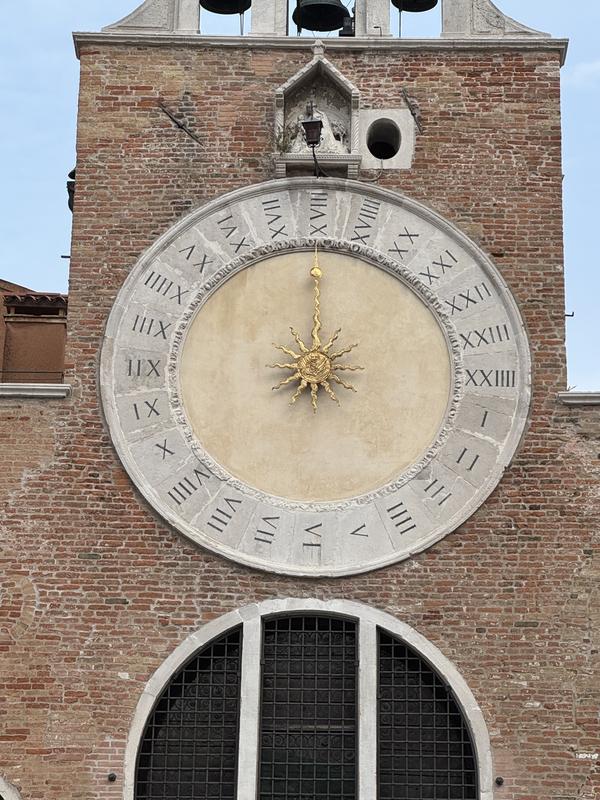
During his trip to Italy, Goethe was struck by what he considered to be unusual time displays – because they still dated from centuries past – including many 24-hour single-hand clocks. So perhaps it is no coincidence that a northern Italian watchmaker built this watch, which is my personal watch. In any case, the Marc & Darnò Geocentric 24h Worldtime Indicator has quasi-historical role models.
I was supported in this project by my good friend Elio from Sicily, who not only helped to break down language barriers, but also provided support with visualisations for the graphic design as an experienced self-taught watch designer. However, the visual design plays second fiddle here, with functionality clearly taking centre stage. I follow the well-known principle of “form follows function”.
I left a good part of the visual design to Marco, because he is simply better at it than I am. You can see this clearly later on if you compare the sketch with the photos.
The concept for the Geocentric 24h Worldtime Indicator
When it comes to word timers, one question has been on my mind for quite some time: “Do you really need to know the exact time in Adelaide in both winter and summer?” This question remains valid even when considering that, even if the summertime information is correct, you still need to know who changes the time and exactly when that happens. I also find Wordtimers to be far too cluttered and complicated to quickly answer the question about the time. Essentially, I want to know if I can expect a quick reply from my WhatsApp group in Tokyo or Boston, or if this is unlikely due to the time difference.
When I look at the dial that Marco and I came up with, I feel like this watch carries me around the world on its four rays. It stimulates thoughts and ideas, awakening memories and expectations.
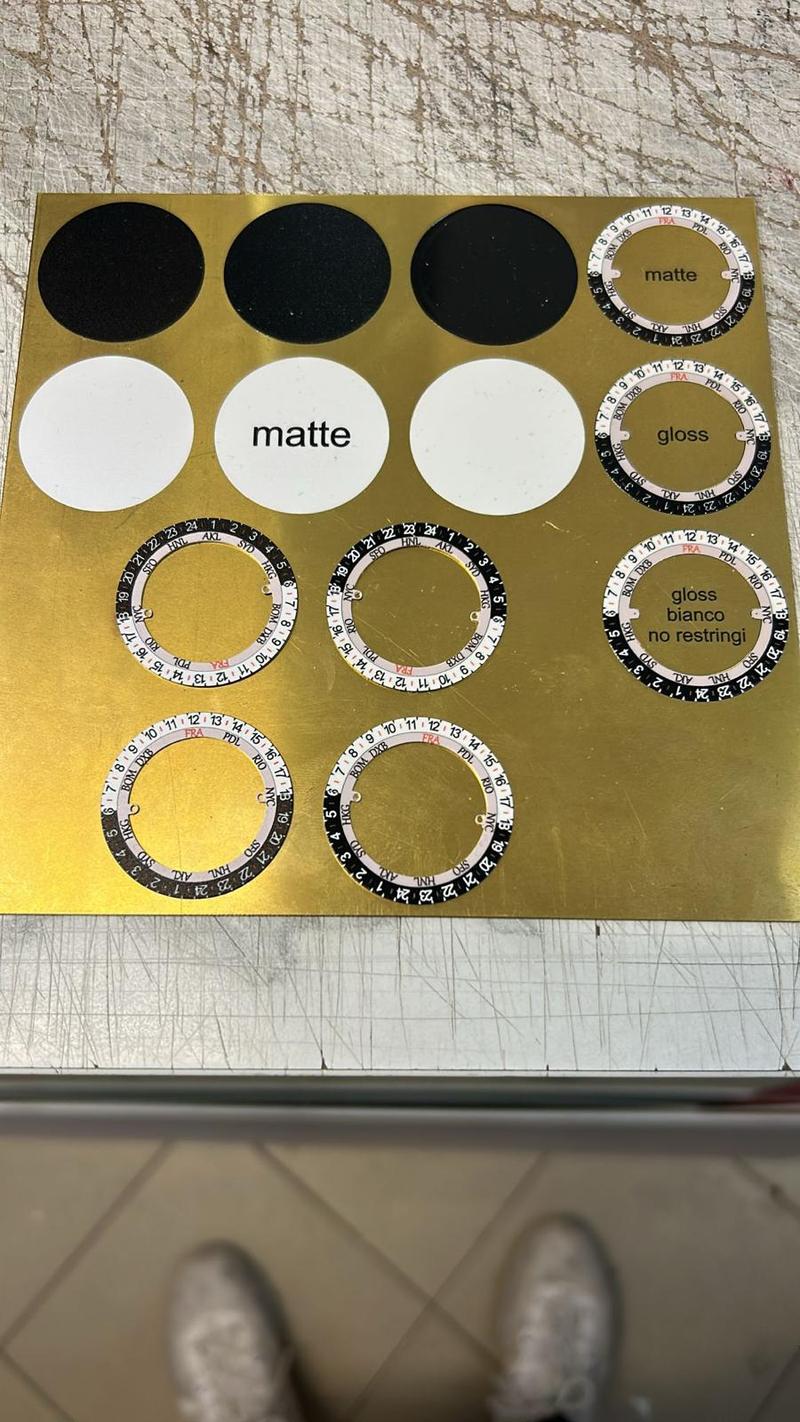
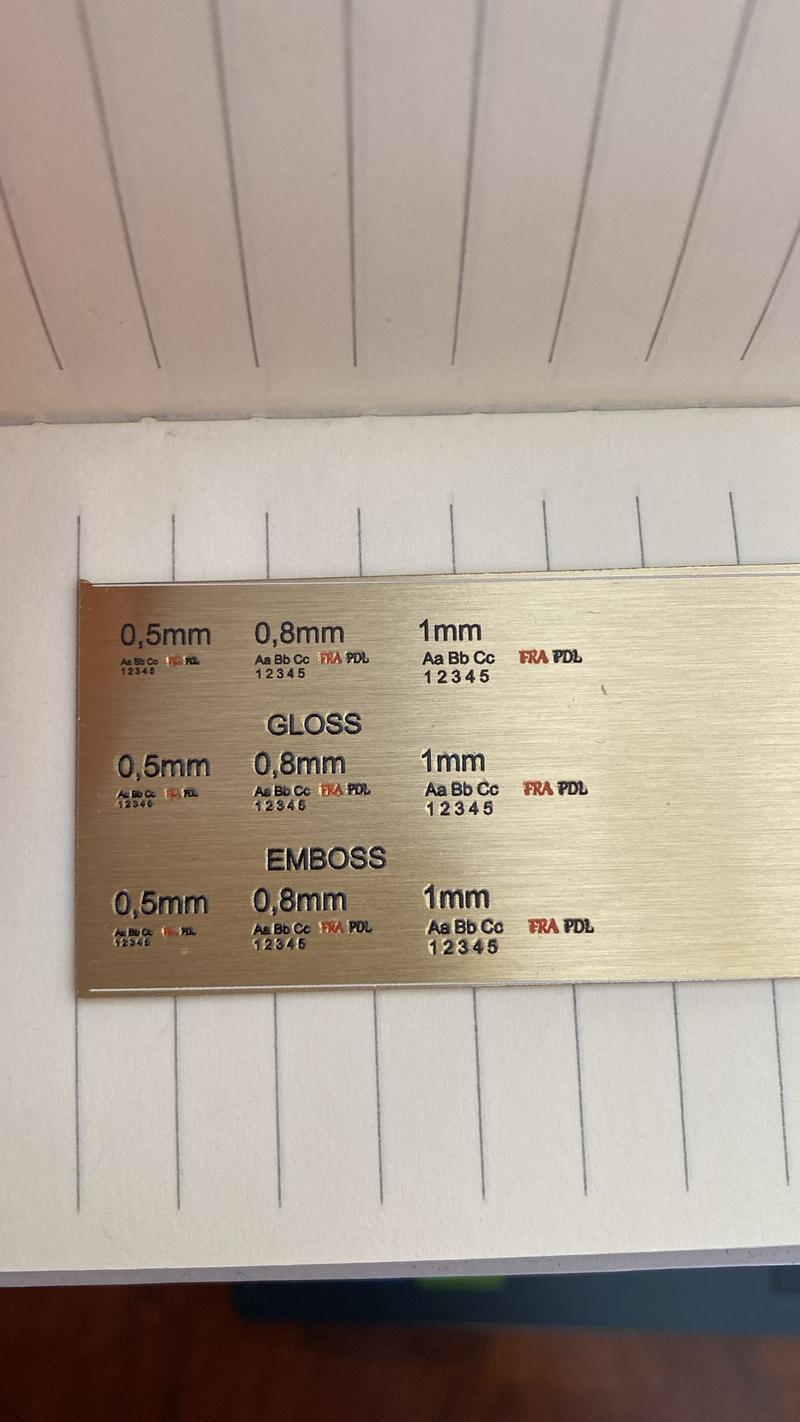
Most world timers feature the 24 standard time zones with the corresponding city names. This is a lot of information for a small dial, and I don’t need most of the cities. It also affects not only the summer and winter time issue but also the many other time zones, such as South Australia and Nepal. Some timers indicate daylight saving time with a dot, but is that helpful?
This phenomenon is what I described above as “apparent accuracy”. My approach to the above question is this: since it is often inaccurate anyway, a rough time display is sufficient for me. I find it more aesthetically appealing, analog, natural, and quicker to grasp. Another question interests me: How would you feel about a world clock that cannot display daylight saving time or half hours? A clock that doesn’t allow you to read the exact time but instead shows the approximate time in the most important time zones at a glance? Think about breakfast or bedtime, lunchtime or bar time. For now, I’ll leave it open as to how you would define these time zones. At this point, I thought about the sun, which from our perspective orbits the globe in 24 hours, passing through the Earth’s time zones.
The watch by Marc & Darnò
The watch essentially consists of two parts.
- The black and white 24-hour ring, which together with the long hand forms a 24-hour single-hand watch.
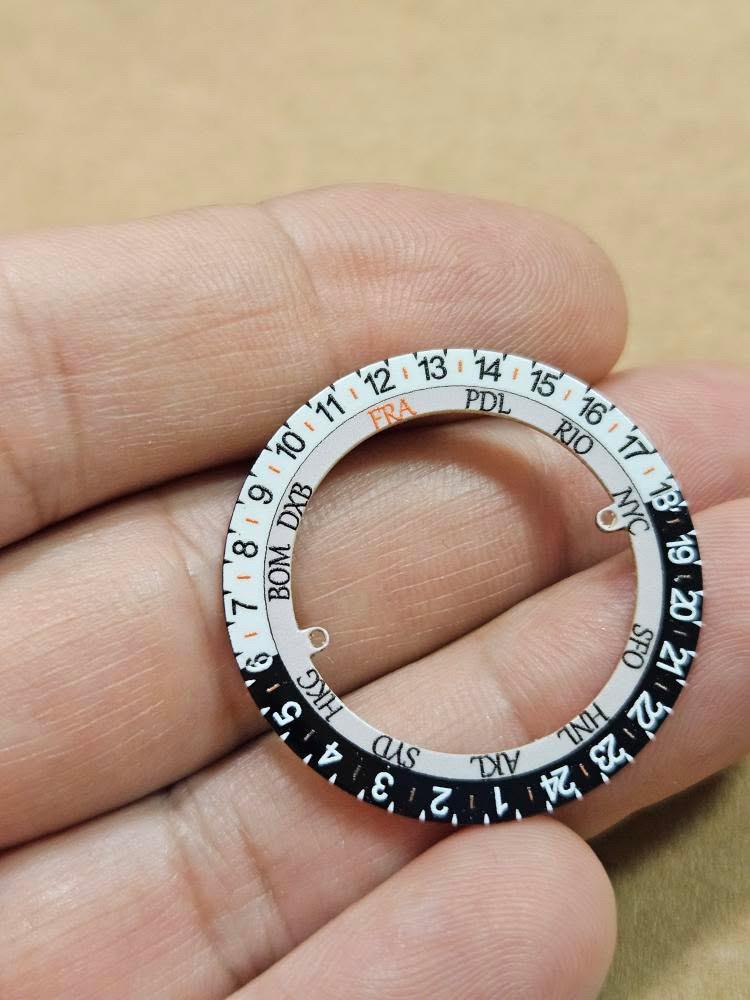
- A gray inner ring, listing cities important to me. Together with the hands and its four directional axes and symbols (sun, moon, sunrise and moonrise), it indicates where it is morning, afternoon, evening or night.
As mentioned before this does not take into account daylight saving time, equation of time/true noon, etc.
So what does this watch do?
The Marc & Darnò Geocentric 24h Worldtime Indicator is a 24-hour single-hand watch similar to others seen elsewhere – from the tower clocks and some early pocket watches mentioned above to watches by Meistersinger, Botta, Montblanc (even with azimuthal polar projection) or the brand Slow Watches.
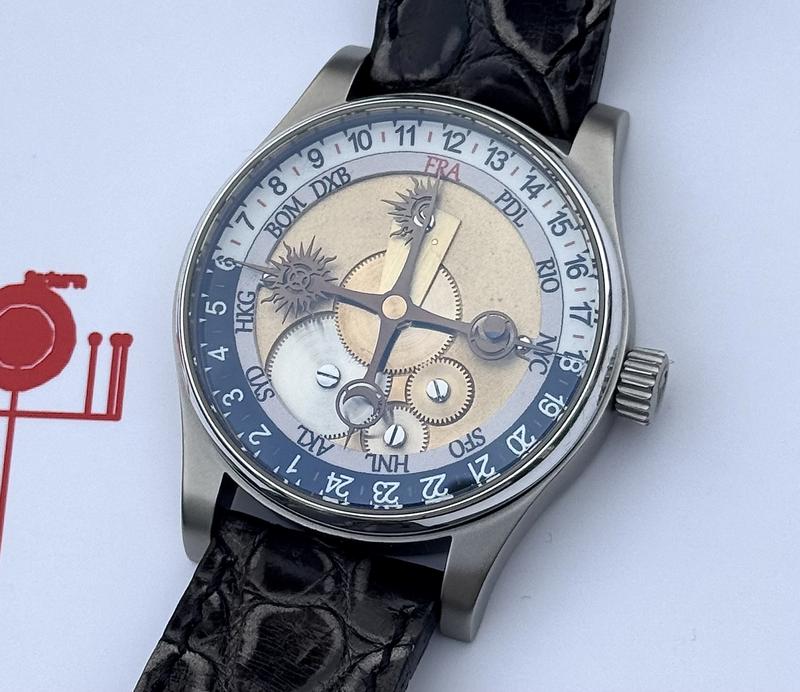
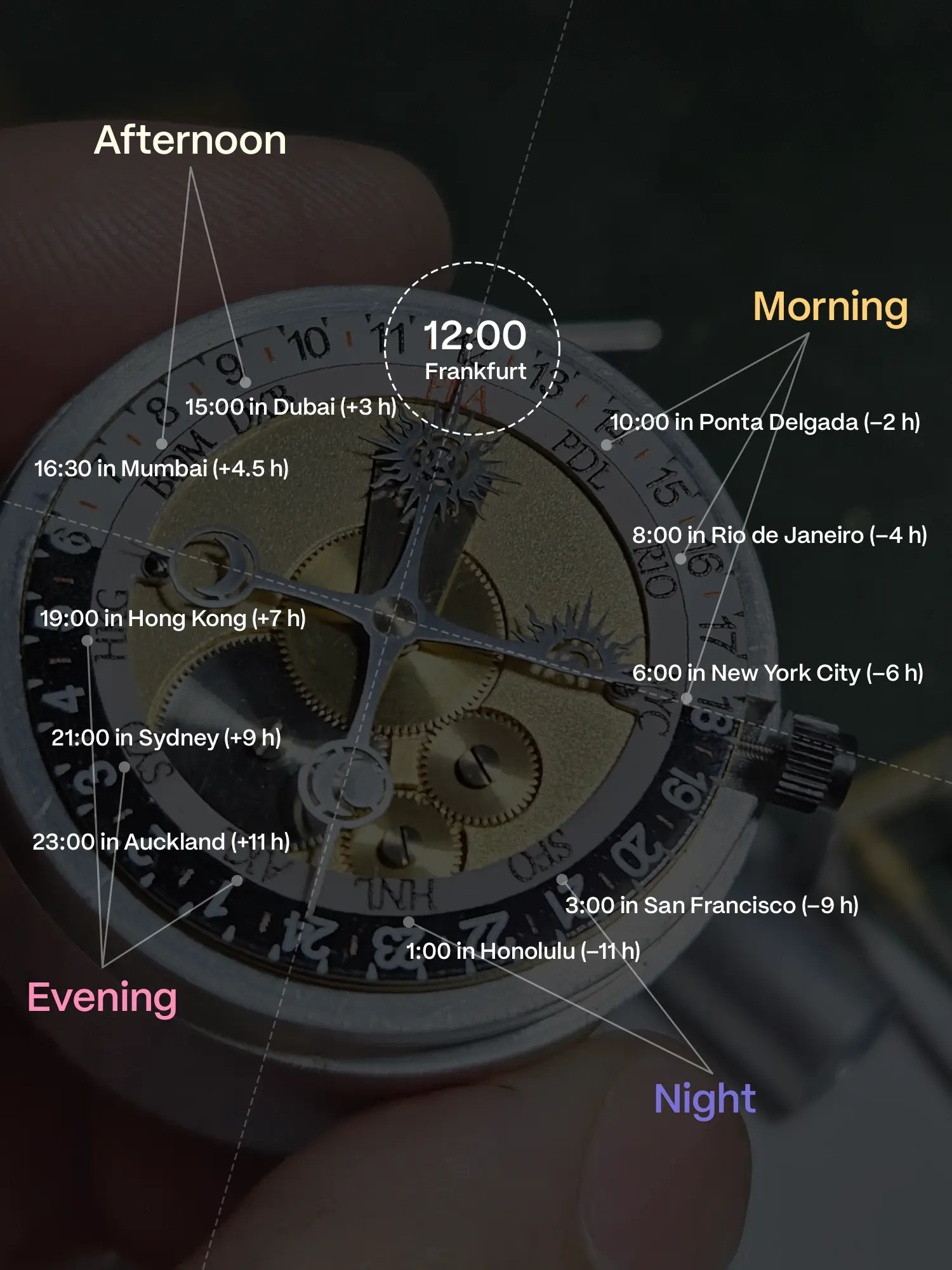
The hand has also another function. This function is paired with a second scale. The city ring lists a limited amount of cities, where I have friends and family. The sun on the hand indicates in which city it is currently noon.
Move the slider from left to right to see how the time changes across the world in relation to Frankfurt.
-
12:00Frankfurt (FRA)
-
10:00–2 hPonta Delgada (PDL, Azores, Portugal)
-
08:00–4 hRio de Janeiro (RIO, Brazil)
-
06:00–6 hNew York City (NYC, USA)
-
03:00–9 hSan Francisco (SFO, USA)
-
01:00–11 hHonolulu (HNL, USA)
-
23:00+11 hAuckland (AKL, New Zealand)
-
21:00+9 hSydney (SYD, Australia)
-
19:00+7 hHong Kong (HKG)
-
16:30+4.5 hMumbai (BOM, India)
-
15:00+3 hDubai (DXB, United Arab Emirates)
Combined with this information, it is a simple step to indicate where it is currently midnight with a moon symbol on the opposite side of the hand. Two other times that are very relevant in everyday life are indicated by the 90° offset directional axes of the hand: 6:00 AM and 6:00 PM.
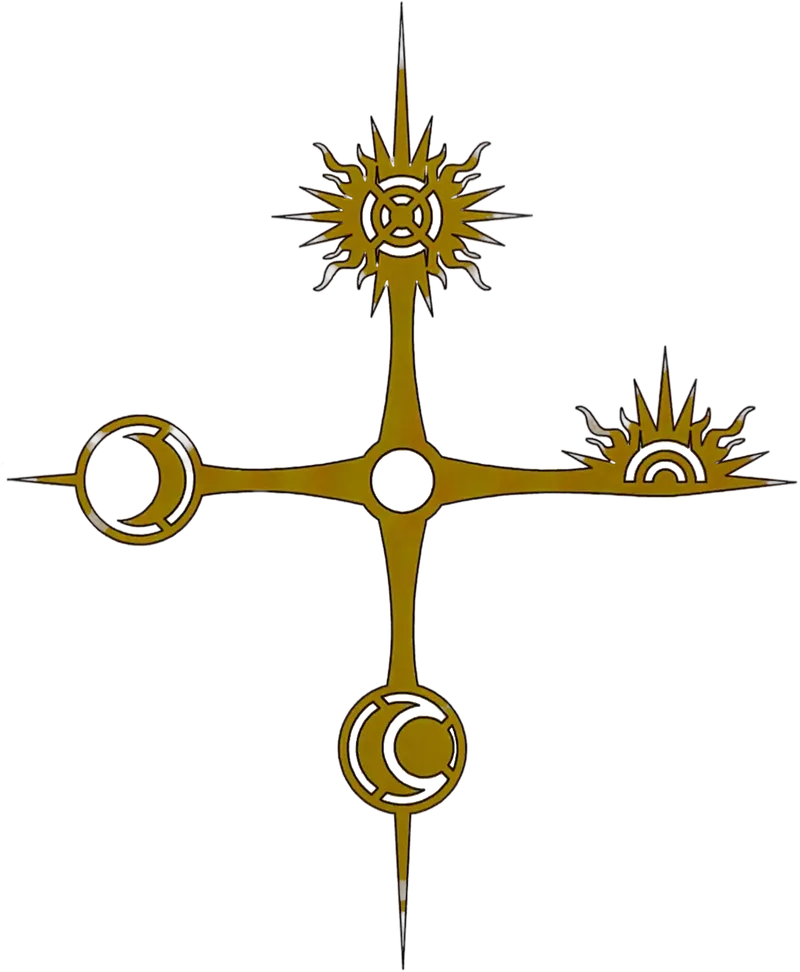
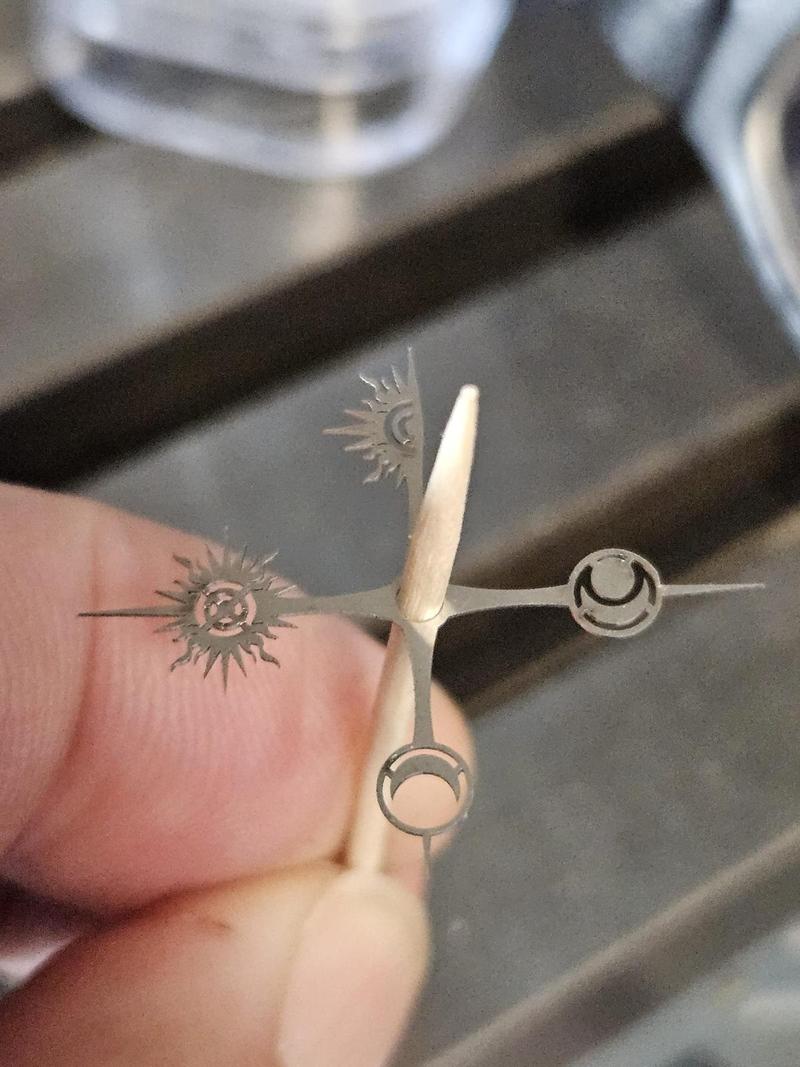
The unusual four-pointed hand displays the local time in Frankfurt and allows the sun, combined with the second scale, to indicate midday at selected locations around the world. The moon indicates midnight, while the small hands mark sunrise (6:00) and sunset (18:00) in the corresponding city.
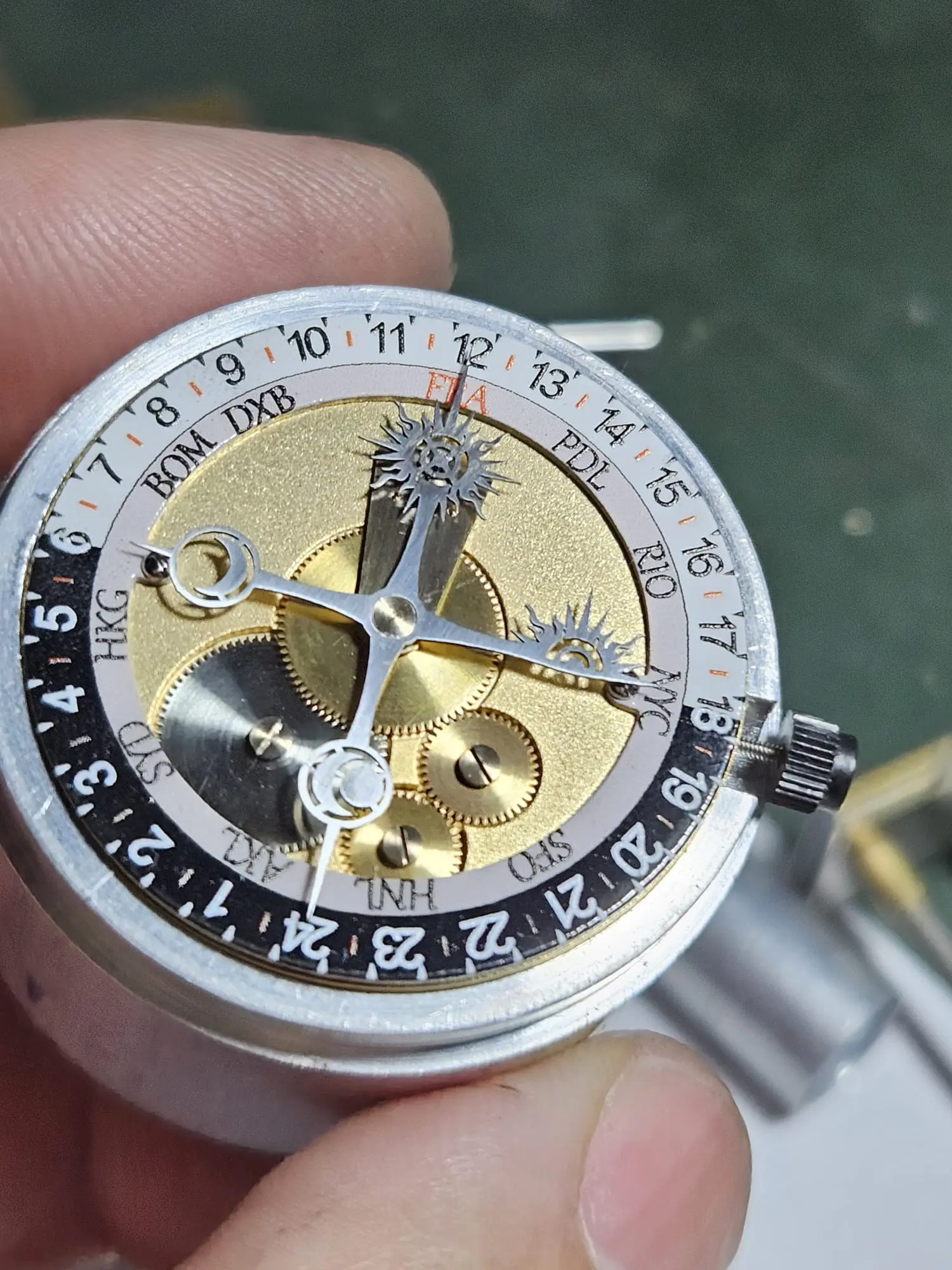
Of course, this watch does not take into account the deviations from true noon to clock noon or the equation of time, nor does it even take daylight saving time into account. “Is that relevant? Could that be a disadvantage?” I don’t think so, because other world time watches don’t do that either. On classic world timers, you can read the time at a destination quite accurately, assuming you have good eyesight. Also it should not deviate due to strange or arbitrary half-hour time zones or daylight saving time. In my opinion, the Geocentric 24h Worldtime Indicator takes a different approach. It prioritizes clarity over apparent accuracy and an analog display over a semi-digital one.
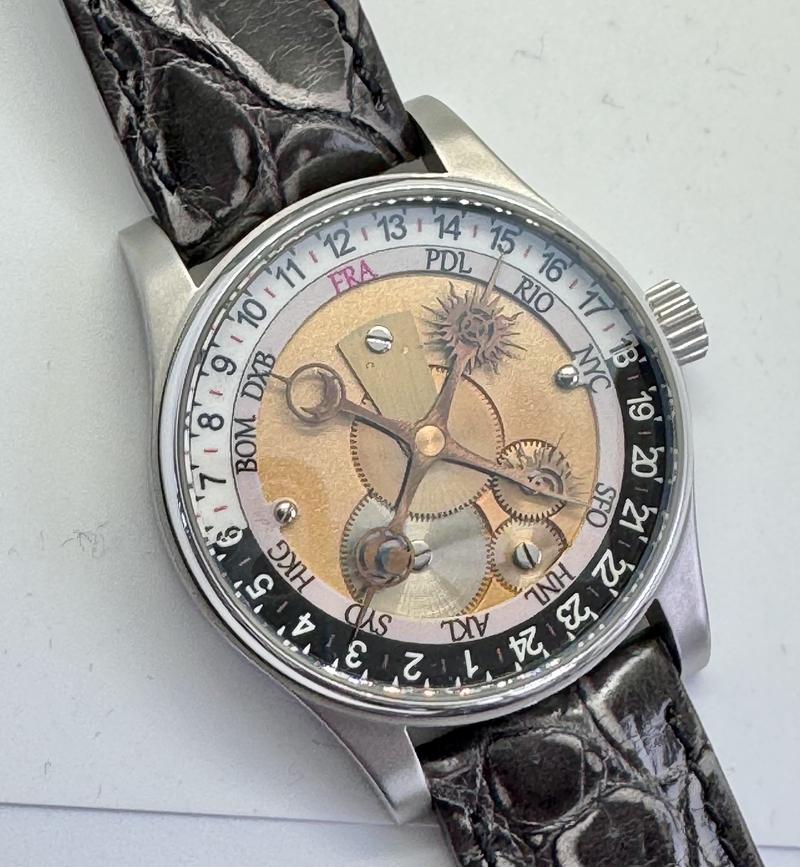
It is also important to mention that this is not a watch that can show that it is exactly 1:43 PM in Kathmandu. But this special design shows at a glance that you can still call your colleagues in Sydney before dinner, but not your better half in New York, as they’re already asleep.
On a personal note, the font used for the city abbreviations is inspired by my wife’s architectural handwriting. This means that I not only have the whole world with me at all times, but even more than that. This is also an aspect that is important to me.
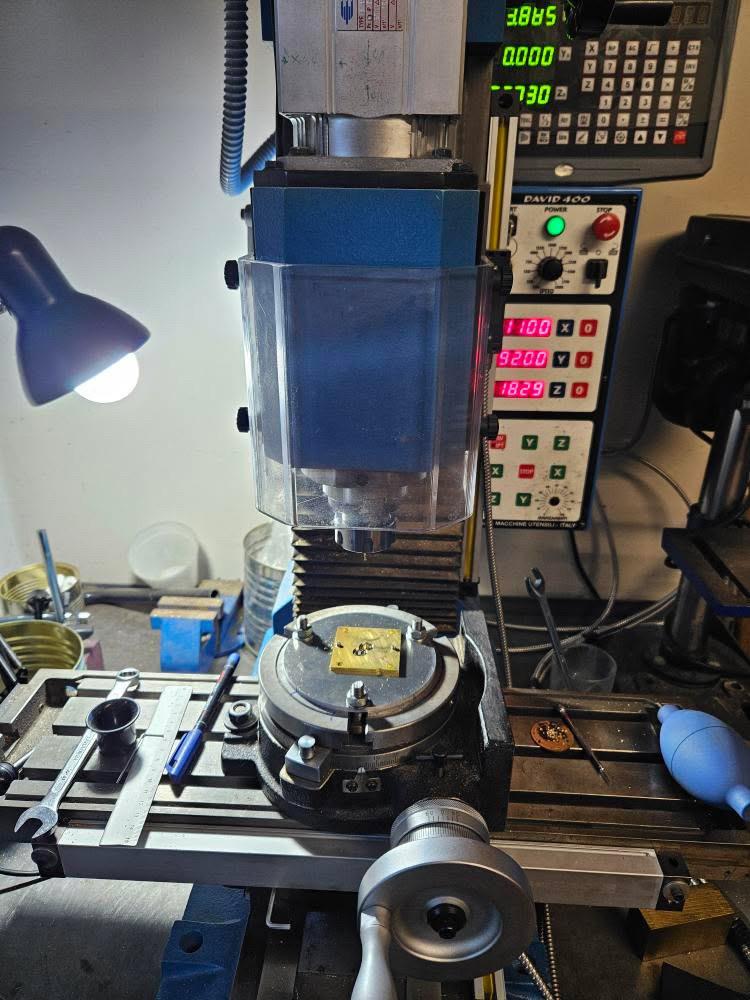
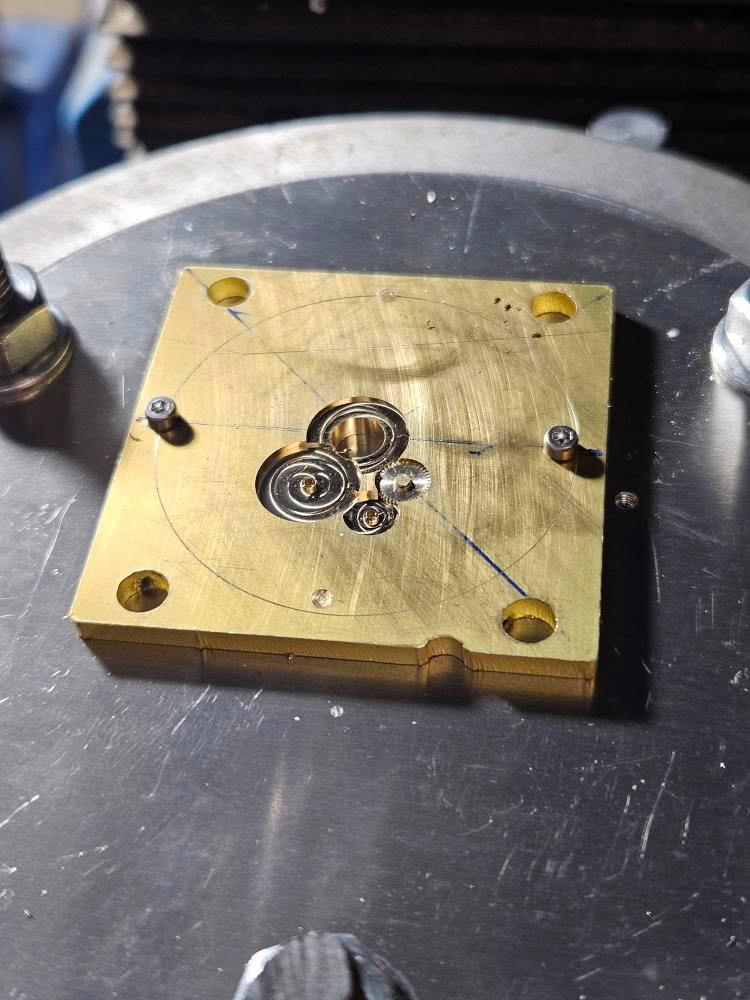
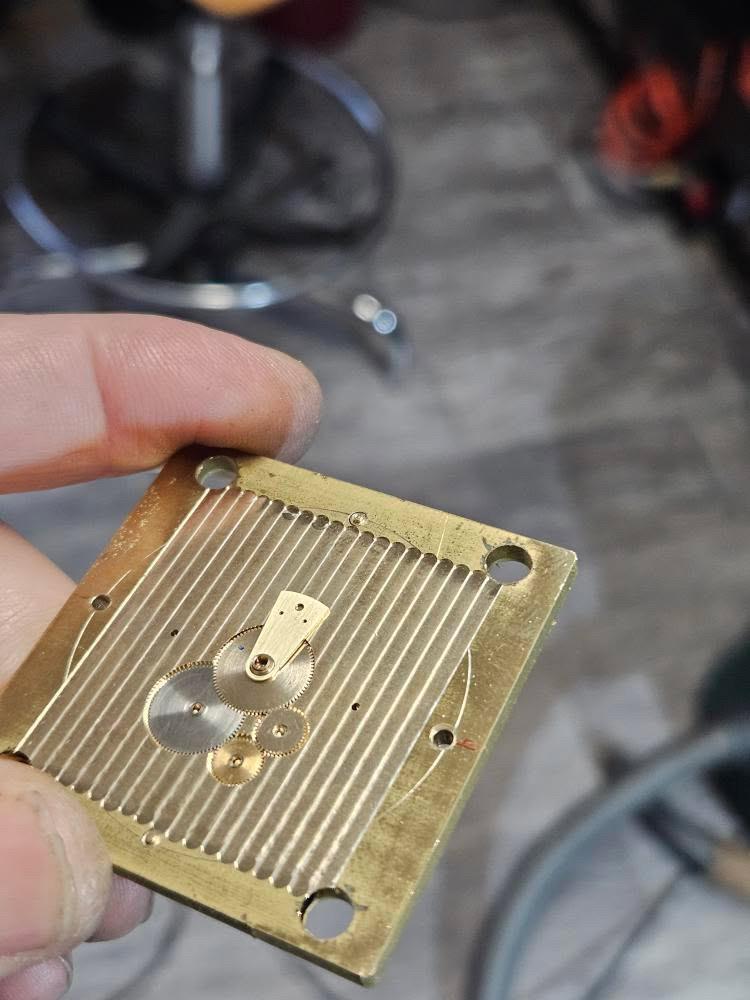
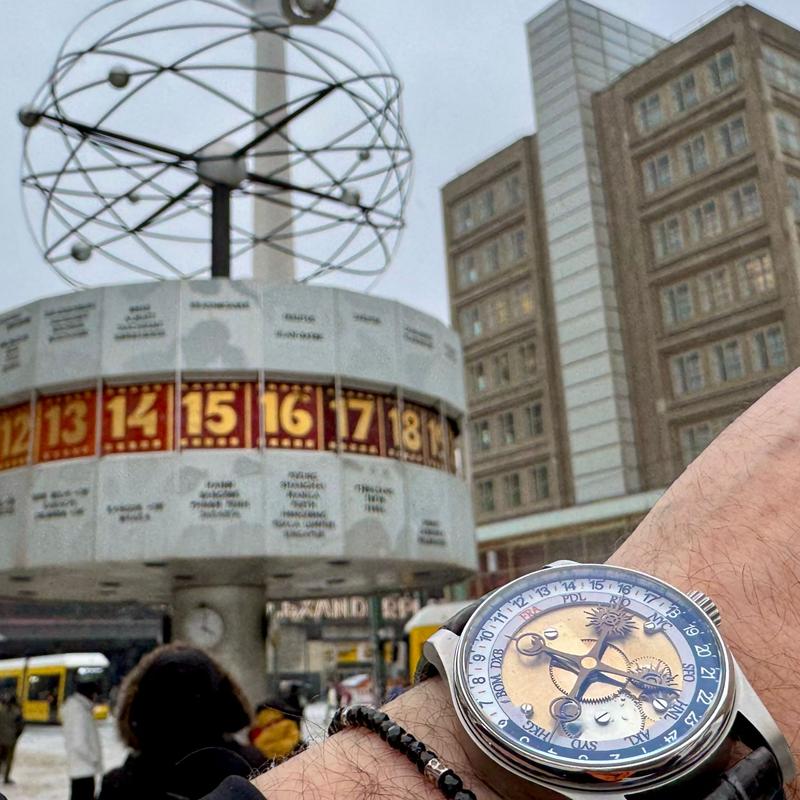
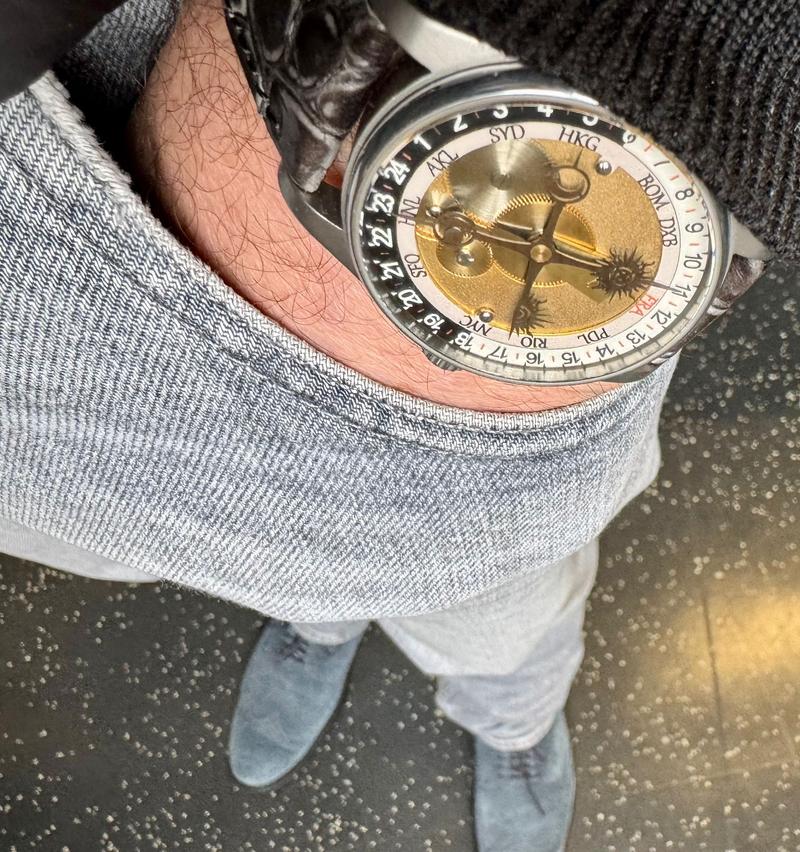
The Marc & Darnò Geocentric 24h Worldtime Indicator is powered by an ETA 2824-2 movement. Marco manufactured the module that reduces the hand speed to 24 hours himself, just as if it were one of his highly complex astronomical complications. It lies exposed in the centre of the watch and uses both brass and German silver. Everything is enclosed in a sandblasted stainless steel (916L) case with a diameter of 39 mm and a domed sapphire crystal. It’s water-resistant up to 5 bar.
Should there indeed be a demand for further editions of this special watch, something that would make me very happy, the new Marc & Darnò manufacture calibre, which is currently in the final stages of development, will be used for this watch.
And, of course, any description of this very special watch must include the following note: the watch has an additional feature that is perhaps a little quirky. Okay, all world timers have this feature, but here it is particularly simple. From time to time, I need to arrange a podcast appointment with colleagues in Australia or the USA. What time suits everyone? To answer this, I simply adjust the watch and then see what time would work for everyone. In my case, it would be late at night in Sydney, but such an appointment would work in Boston.
The fact that this is a single-hand watch has perhaps been somewhat underplayed up to now. For many inexperienced observers, this raises the question: “Can you even tell the time with it?” My personal enthusiasm for watches began with the Chromachron by Tian Harlan. It is a unique single-hand watch that is even featured in the collection of the Musée d’Horlogerie in Le Locle, Switzerland. After a little practice, I could read this watch to within five minutes. And if I have to catch a train at 3:32 PM, I’m usually on the platform by 3:25 PM at the latest anyway. In addition to slowing down, the slightly limited reading accuracy also gives you the wonderful experience of a 24-hour overview of the entire course of a day. Although it may take some getting used to, the angle of the hand provides a much quicker indication of the time remaining until the next event. After all, that’s the only reason we need a watch.
Epilogue: tower clocks from Italy
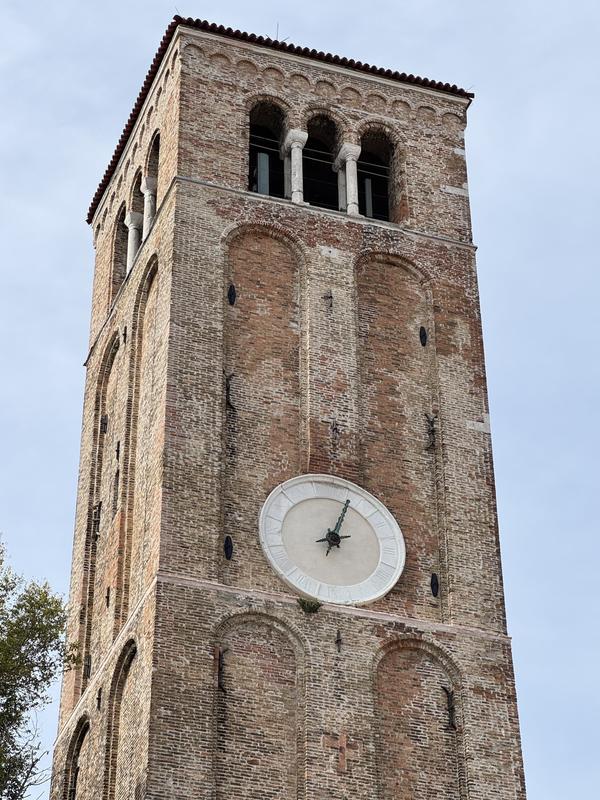
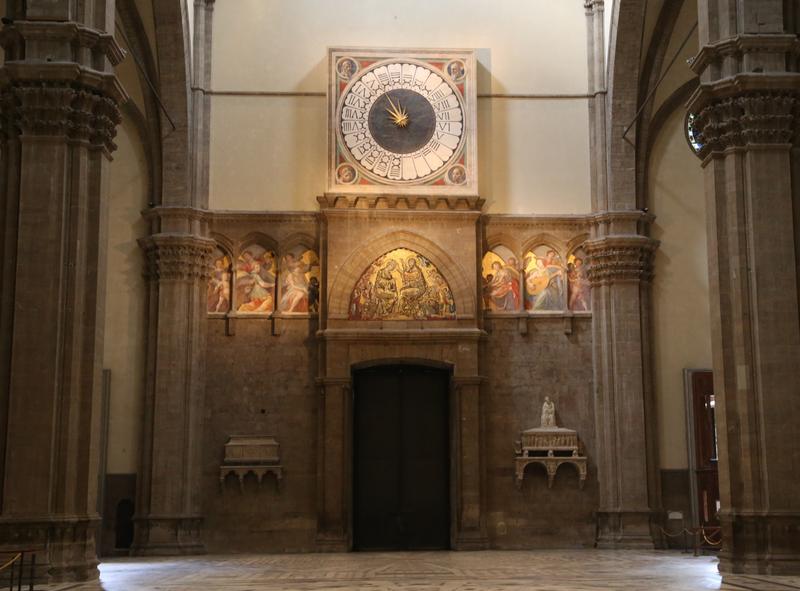
Around 1350, clocks began to enter the lives of ordinary people in Europe. Starting in northern Italy, there was a veritable boom in tower clocks. At first, some of them had no dials and only bells, such as the Torre del Gardello in Verona, which is considered one of the first bell towers. The dials of these clocks were not always uniform in design. As a rule, however, they were in 24-hour format with only one hand and usually displayed the following information according to Italian time: the day begins at 6:00 AM and ends at 6:00 PM (i.e. the end of the day is not at midnight) with 6:00 PM at the top, where we would expect 12:00 noon today.
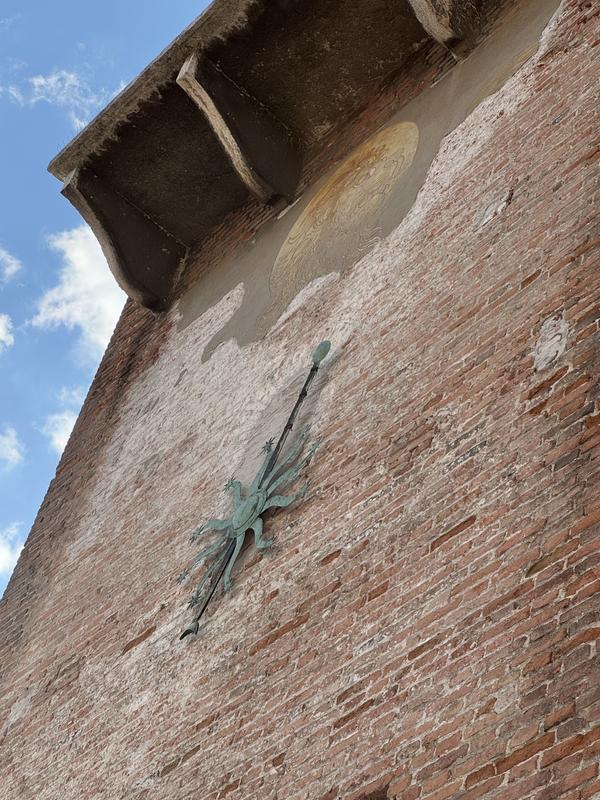
Similar clocks can still be seen today in northern Italy on the towers of cities. Sometimes with a 12-hour display (presumably converted) and often with the indices in the wrong place, as these originally framed the hour segment.
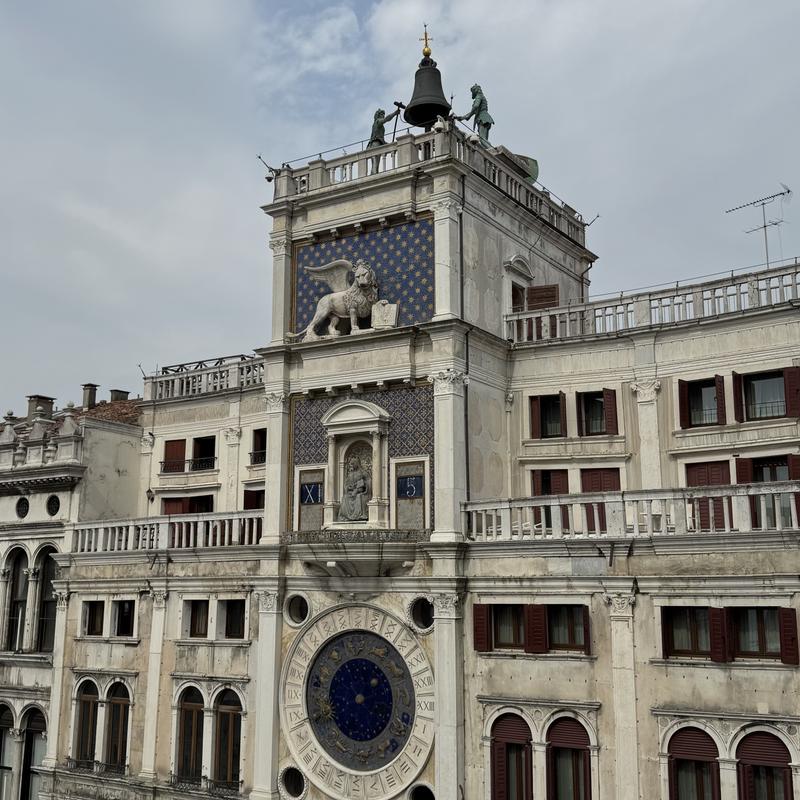
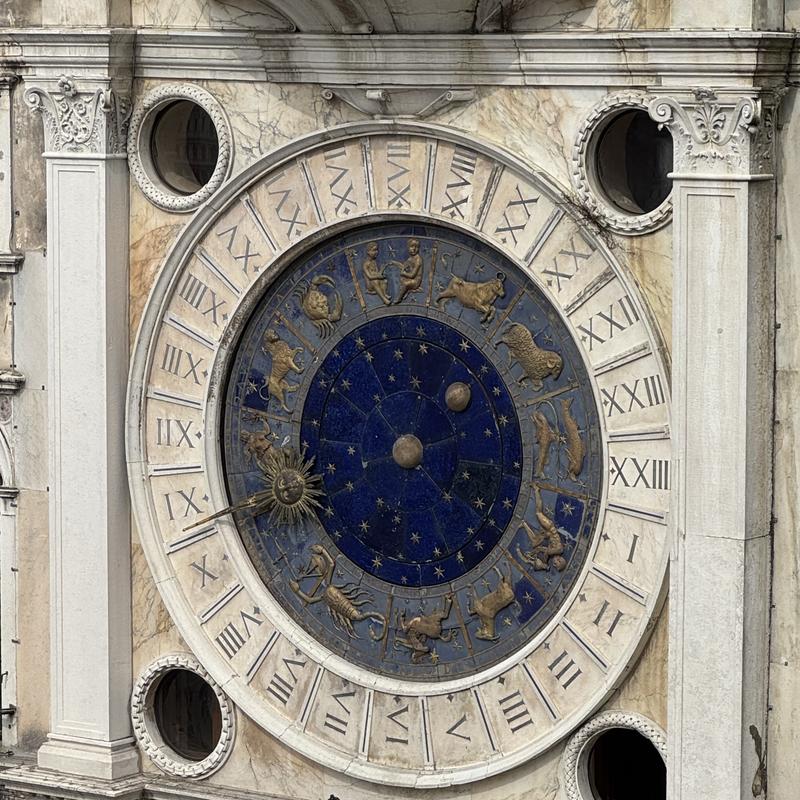
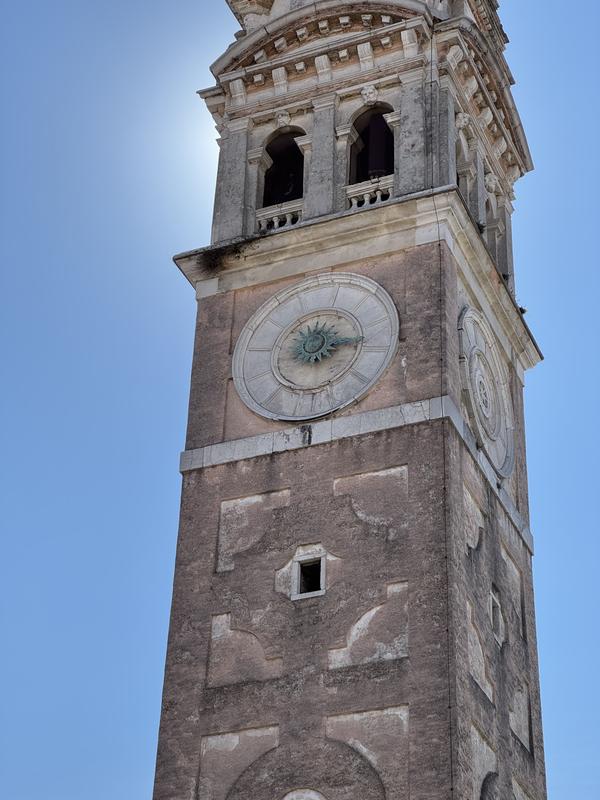
Source
Rufus46 on Wikipedia (https://de.wikipedia.org/wiki/Datei:Uhr_Dom_Florenz-01.jpg)Epilogue II: a similar concept from Kudoke
While my watch was in the works, I was surprised when I saw Kudoke’s new watch, the Kudoke 5, at the aforementioned AHCI exhibition in spring 2025.
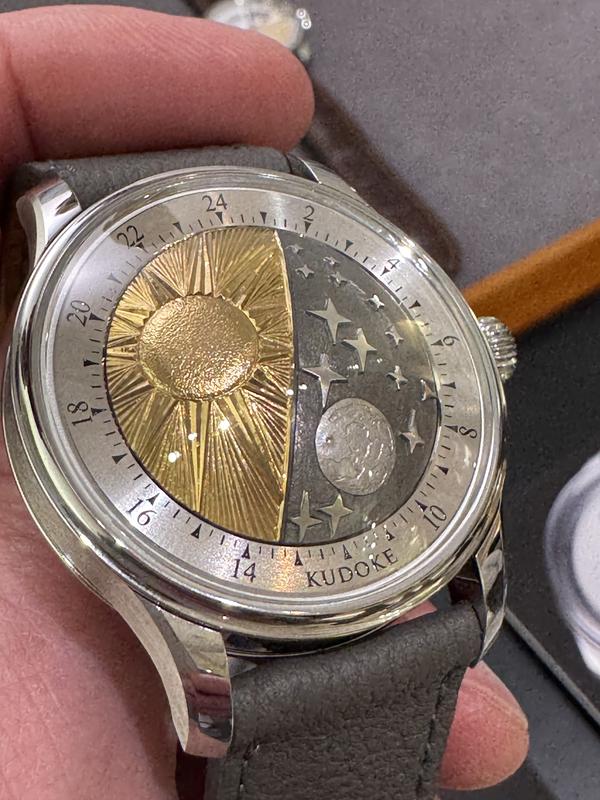
A sun-moon disc that rotates once every 24 hours, thus indicating the time. The time can be read in two ways. As intended, on the index, the most outer star of night half of the dial. in this photo, it is 7:15 AM. The transition between day and night indicates 6:00 AM and 6:00 PM. At 12:00 midday, the transition of both dials is horizontal and the sun is at its highest point.
Epilogue III: blast from the past
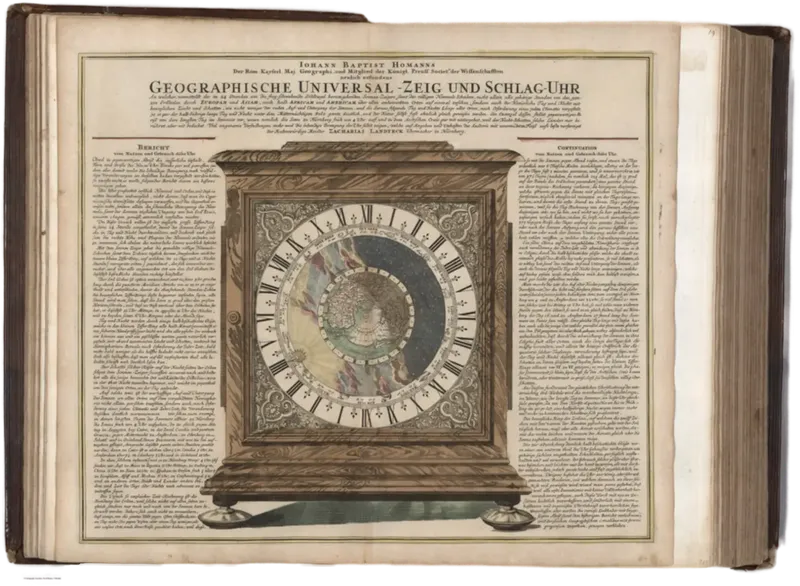
This is the Mother of all World Timers. That’s how none other than Ludwig Oechslin describes the Geographical World Clock by Johann Baptist Homann and Zacharias Landteck, a masterpiece from around 1700. The antique print in which the maker of that the clock describes it states:
Source
David Rumsey Map Collection, David Rumsey Map Center, Stanford Libraries.“Where the sun is vertically above the earth’s surface, it is midday, opposite midnight and on both sides 6 o’clock in the morning or evening.”Johann Babtiste Homann, “Geographische Universal-Zeig und Schlag-Uhr”, 1716
I came across this after my “World Time of Friends” was designed, but it proves once again that there is nothing new in watchmaking and everything has been done at some time.
Acknowledgements
Many thanks to Elio for his help in turning my ideas into understandable and usable drawings. Thank you to Thomas for editing and providing feedback on the first manuscript.
I won’t compare myself to Goethe in any way, but I too have embarked on a journey to Italy – albeit only thematically so far – and have been exploring Italian watchmaking. Those who have followed me this far will be able to understand a little of my longing for time and the world, my inability to read the time here and there with minute precision – and, above all, appreciate the conceptual and artisanal beauty of the “World Time of Friends”.
“È una bella sensazione, come Tedesco, indossare un orologio Italiano che abbraccia il mondo.”
“As a German, it’s a great feeling to wear an Italian watch that embraces the world.”
Write a comment